

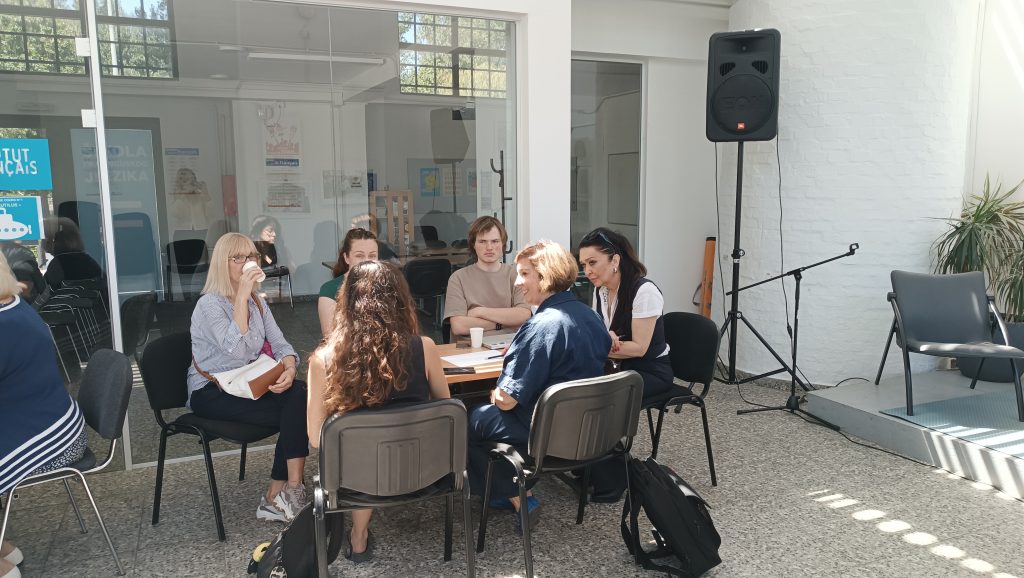
Support from teachers, peer solidarity, language learning, and better coordination among institutions are key to the successful educational integration of migrants and refugees in Serbia, participants concluded at the civic panel “Migration and Educational Integration – A Conversation on Education, Inclusion, and a Shared Society”, held in Novi Sad as part of the project “Strengthening Serbia’s Response to Migration and Inclusion Challenges.”
Jovana Vinčić, Executive Director of the Asylum Protection Center, emphasized that education is one of the most important aspects of integrating migrant and refugee children.
“The issue of educating refugee and foreign children will be discussed much more extensively in the coming period. Today, we have experience and procedures that did not exist before, but there is still room to improve the support system”, said Vinčić.
Valentina Ilić, President of the Education Union of Serbia, highlighted that schools in Serbia generally demonstrate a high level of openness and solidarity toward children arriving from other countries.
“Children accept one another much more easily than adults do. They learn together, socialize, and overcome differences very quickly. The greatest challenges are usually related to language barriers and administrative procedures, but with the support of teachers, pedagogues, and psychologists, these obstacles can be overcome”, Ilić noted.
Speaking about experiences from Malta’s education system, Ljiljana Ćumura said that living in a multicultural environment demonstrated how capable children are of adapting to a new setting.
“The school my children attended included students from more than one hundred nationalities. I was fascinated by how quickly children overcome language barriers. Through shared activities and the support of teachers, they manage to integrate and participate equally in classes within just a few months. This experience made my children more open to diversity. Through daily interaction with peers from different cultures, they learned how important mutual understanding and respect are”, said Ćumura.
Ana Maslova, who arrived in Serbia with her family from Ukraine after the outbreak of the war, also shared her experience of integration.
“The help we received from people who assisted us with school enrollment and adjusting to a new environment immediately after our arrival meant a great deal to us. Thanks to that support, adapting was much easier. When you come to a new country, it takes time to feel like part of the community. School is one of the first places where that process begins, which is why its role is exceptionally important”, said Maslova.
During the panel, participants identified solidarity among students, support from teachers, established procedures for including migrant children in the education system, and cooperation between schools and organizations and institutions supporting migrants and refugees as examples of good practice.
The panel concluded that Serbia already possesses positive experiences and examples of good practice in the field of educational integration of migrants. However, continued systemic improvements are needed to ensure that every child, regardless of their background, has equal opportunities for education and participation in society.