
A reduction of textile waste, water savings and the recovery of waste heat in food production — these are the first measurable results presented by five Serbian companies at seminars on the circular economy, held at the Europe House in Belgrade as part of the EU Green Week.
The experiences of Jasmil, PS Fashion, Dax Intimo, Global Sistem Kooperativa and Ribella Foods show that the circular economy is not merely an environmental obligation, but also a path towards greater efficiency and competitiveness for Serbian industry.
Organised within the EU for Circular Economy in Serbia project, the events presented the results achieved through direct cooperation with Serbian companies and explored opportunities for further advancing circular economy practices in business operations.
In addition to representatives of the five partner companies on the project, the seminars brought together representatives of the Ministry of Environmental Protection, the Delegation of the European Union to Serbia, business associations and other relevant stakeholders.
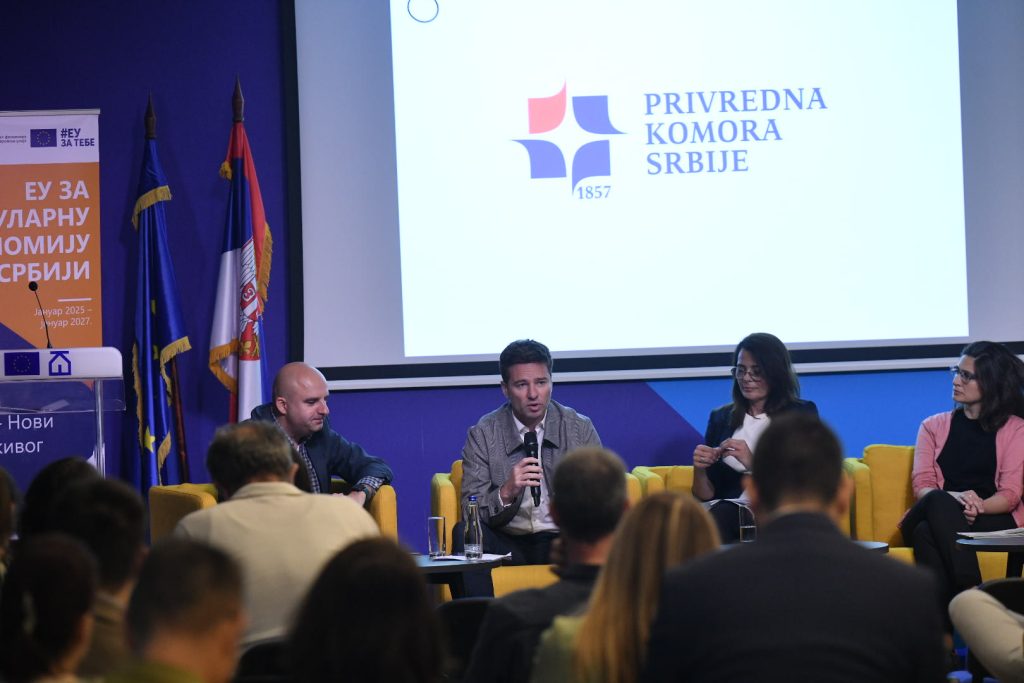
Over the past year, the companies worked with circular economy experts to identify opportunities for improving resource efficiency, reducing waste and strengthening competitiveness through tailored Circular Economy Action Plans. As part of the project, they also took part in study visits to leading European innovation centres in the textile and food sectors, where they learned about the best European examples of circular innovation and sustainable production.
Opening the seminars, Andreja Vidal, Programme Manager at the Delegation of the European Union to Serbia, highlighted the importance of supporting businesses in the transition to a circular economy.
“The companies’ commitment to adopting green and circular practices clearly shows that they recognise the economic, environmental and social value of such an approach. The European Union supports these efforts and remains a strong partner to Serbia in the green transition, fully aligned with the Green Agenda for the Western Balkans. This change requires joint action by government, business, academia, civil society and international partners in order to build a sustainable and resilient future.”
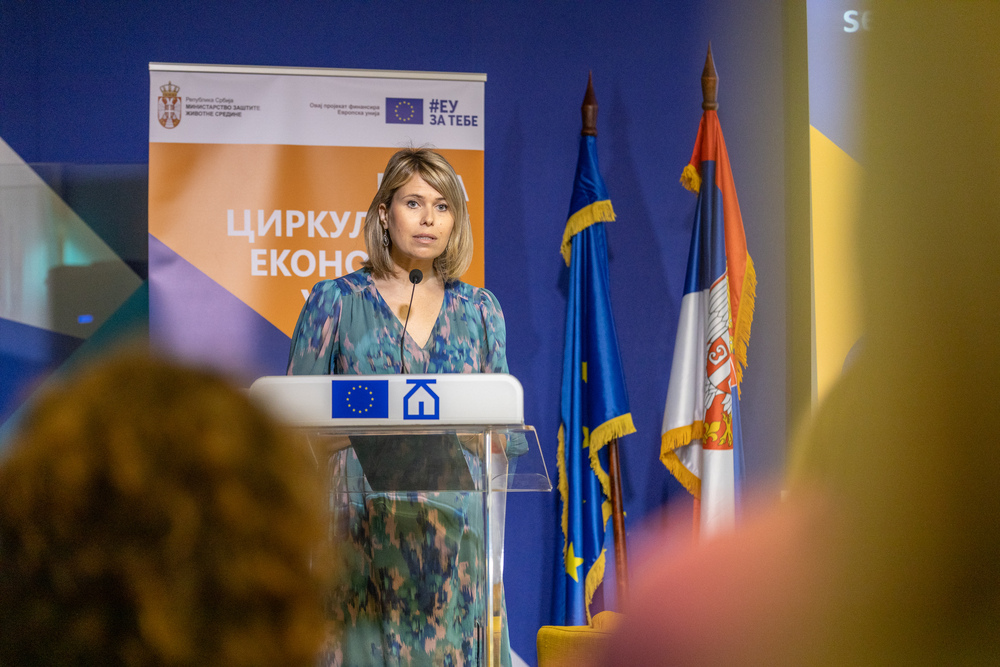
On behalf of the Ministry of Environmental Protection, Assistant Minister Teodora Spasojević underlined that circular economy cannot be achieved without cooperation between institutions and businesses.
During the two seminars, the participating companies presented key projects from their Circular Economy Action Plans and discussed financing opportunities for future investments in this area.
The events also highlighted the importance of cooperation between public institutions, businesses and development partners in supporting investment and innovation in the circular economy. With the participation of organisations such as the Chamber of Commerce and Industry of Serbia, the FACTS Textile Cluster, NALED and the Innovation Fund, the project contributes to spreading knowledge and practical solutions across the wider community of Serbian companies.
The seminars mark an important milestone within the EU for Circular Economy in Serbia project, which continues to support Serbian municipalities, companies and citizens in the transition towards a more sustainable and resource-efficient economy.
The EU for Circular Economy in Serbia project is implemented by the Ministry of Environmental Protection with the financial support of the European Union and the technical assistance of NTU International and Global Factor.
The event is part of the EU Green Week, which has for 25 years been Europe’s leading environmental campaign and an annual opportunity to raise awareness, promote and discuss current and future European Union environmental policies. EU Green Week 2026 invites citizens to become part of the change — through small everyday decisions that, together, can have a major impact on the future of nature and society.