

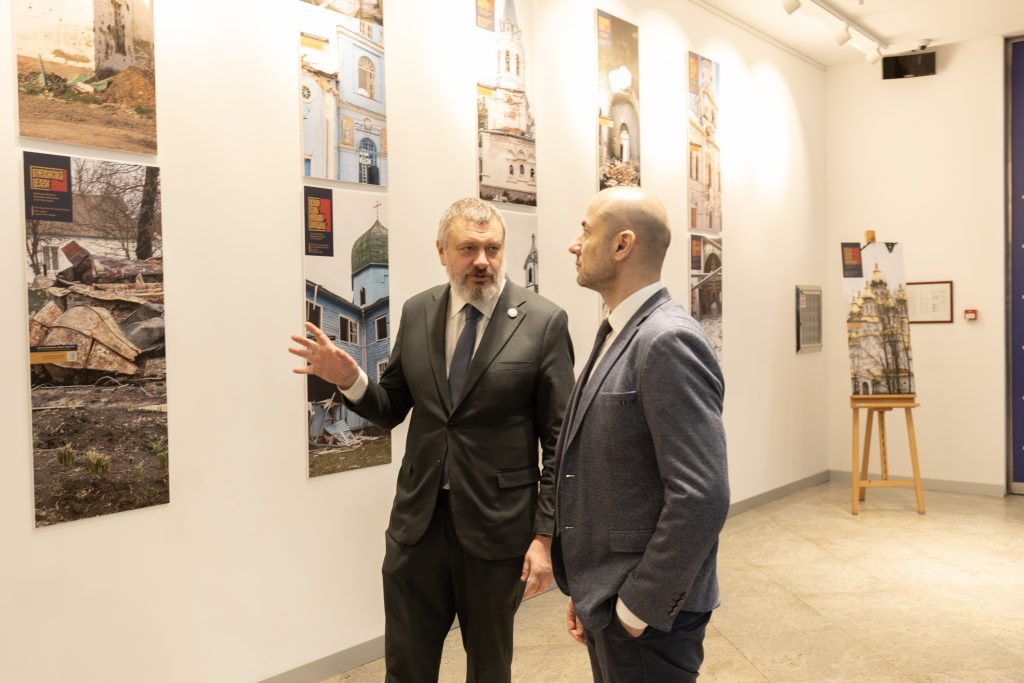
“They will revive in glory and power” is the theme of the exhibition that opened in the European House on the occasion of the four-year anniversary of the beginning of the comprehensive Russian invasion of Ukraine, with the presence of a large number of citizens, representatives of the diplomatic corps and various associations. The exhibition will be on display until Friday, March 6.
“Today is one of the saddest dates in the 21st century. century” – said the Ambassador of Ukraine to Serbia Oleksandar Litvinenko , stating that the years of war brought great suffering to his people.
“The Russians are also destroying civilian sites, energy infrastructure, industrial infrastructure, but also churches, synagogues and mosques.” These are people who talk about Orthodoxy, and they destroyed 500 churches and religious sites in our country. “I most sincerely hope that peace will come as soon as possible, that security will return not only to Ukraine, but also to the whole of Europe,” Ambassador Litvinenko said.
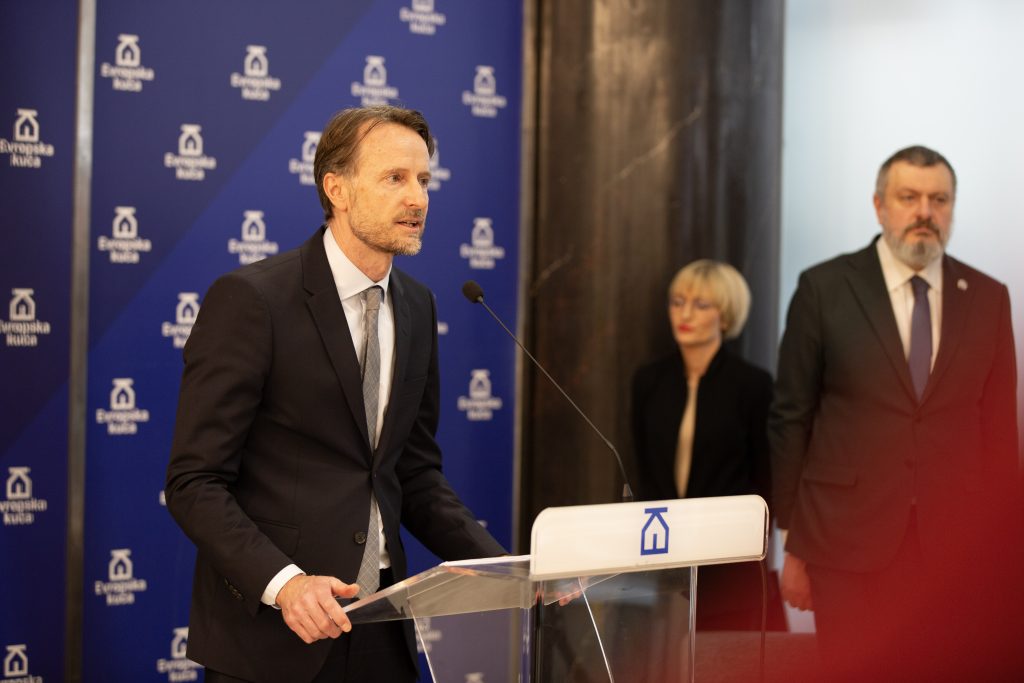
The European Union continues to support Ukraine , and to end the war, it is enough for Russia to withdraw its troops from the territory of that country, according to the EU ambassador to Serbia, Andreas von Beckerat .
“2026.” it must be the year that will bring this war to an end. No peace arrangement can be credible or sustainable without Ukraine. No solution affecting European security can succeed without the full involvement of Europe. Our position is clear: peace must be just, lasting, in accordance with international law and based on credible security guarantees. Aggression must not be rewarded. The European Union will continue to support Ukraine in every way and as long as necessary,” says Ambassador Von Beckerat.
Russia’s military aggression against Ukraine has left behind abundant evidence of destruction, including devastated and looted religious buildings, educational institutions and holy sites. Since the start of the full-scale invasion, at least 500 sites have been damaged or destroyed – from newly built centers of religious life to architectural, historical and artistic monuments of exceptional cultural value.
The exhibition aims to document and make visible the holy objects of different faiths and denominations in Ukraine, which from 2022 damaged or destroyed. It tends to awaken not only sadness and indignation, but also confidence in the strength and resilience of the Ukrainian spirit, as well as faith in the imminent recovery of the country and the renewal of its spiritual heritage.
Monasteries, churches, churches, mosques, synagogues and other places of worship were particularly affected in the regions of Donetsk, Lugansk, Kharkiv, Kyiv, Kherson and Zaporozhye. Their number continues to grow. New reports of attacks on religious buildings, especially in the east and south of Ukraine, are arriving almost daily.
After Belgrade, the exhibition will be staged in Novi Sad from March 10 to 15 in the OPENS premises (Bulevar Despota Stefana 5, Novi Sad).
The exhibition is a joint exhibition of the “Kiev-Pechersk Lavra” National Reserve and the Maidan Museum
At the European House, you will also find a discussion about the book “Happy Naked People” by the Ukrainian artist Katerina Babkina as part of the Books in the Center series (Wednesday, 7 p.m.).