
On the first weekend of August, the canyon of the Jerma River below the Pirot village of Vlasi once again became the stage for the Jerma Art Festival, held for the third time. A village with just fifteen permanent residents welcomed several hundred visitors from Serbia and Bulgaria, offering music, film screenings, and artistic and environmental workshops.
The festival is organised by the Jerma Citizens’ Association, made up mostly of young people originally from the village of Vlasi. For one of them, Srđan Mančev, the festival was not born out of a programme idea, but out of a deep attachment to the place.
“The village is much more lively in summer than in winter, but we’ve never seen it this full of people before,” said Mančev.
The association’s journey from an informal group to an organisation now running a three-day international festival was supported by the EU Resource Centre for civil society in Serbia, implemented by the Belgrade Open School and its partners with the support of the Delegation of the European Union to Serbia. With this support, the association developed its website and visual identity and received an action grant to clean up a waste dump along the Jerma River, a particularly sensitive task in a protected area.
“Jerma is a good-practice example of how a local initiative can grow into a civil society organisation, become sustainable and make a significant impact on the local community,” says Milivoje Jovanović from the EU Resource Centre.
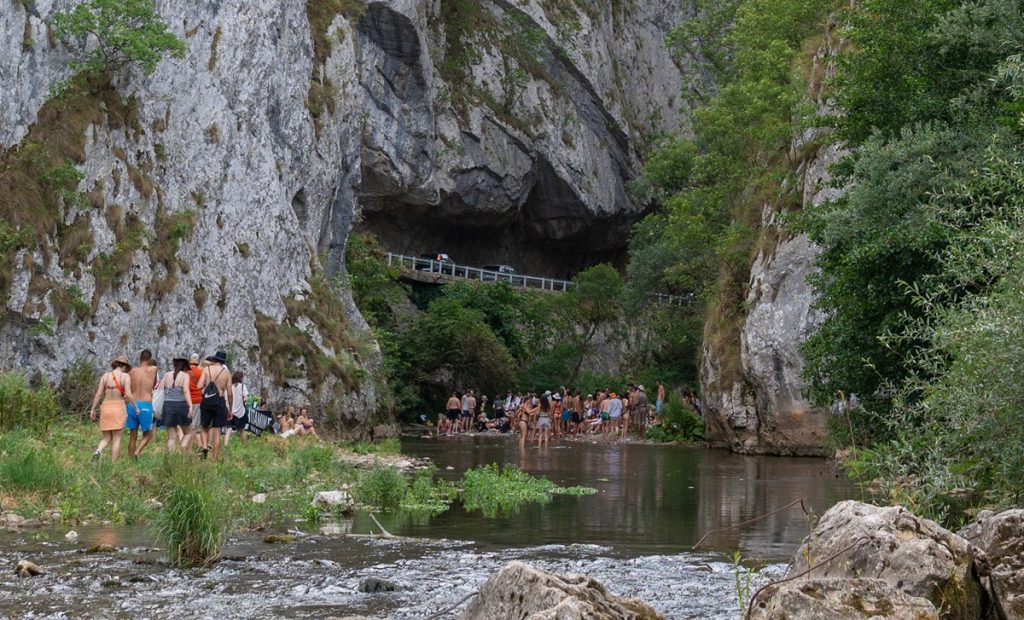
“There used to be an accumulation of plastic bottles under this bridge that had built up over twenty years,” Mančev recalls. “Last year, we organised a clean-up campaign, and a year later there isn’t a single one left. We love this place and we don’t want to pollute it.”
Environmental protection at Jerma is not just a message, but a daily practice: recycled cups, organised waste disposal and volunteer clean-up campaigns. The impact extends beyond the festival itself, as Jerma has also helped boost tourism in the area: the number of foreign visitors is growing, while local residents are developing accommodation options of their own.
How did an EU cultural programme bring writers to a village of fifteen houses?
At the festival, the Creative Europe Desk Serbia presented the Call for the Circulation of European Literary Works, this year’s edition focusing on “Green Literature”. Through the initiative, ten titles addressing environmental issues have been translated and published, with part of the print run distributed to festival visitors.
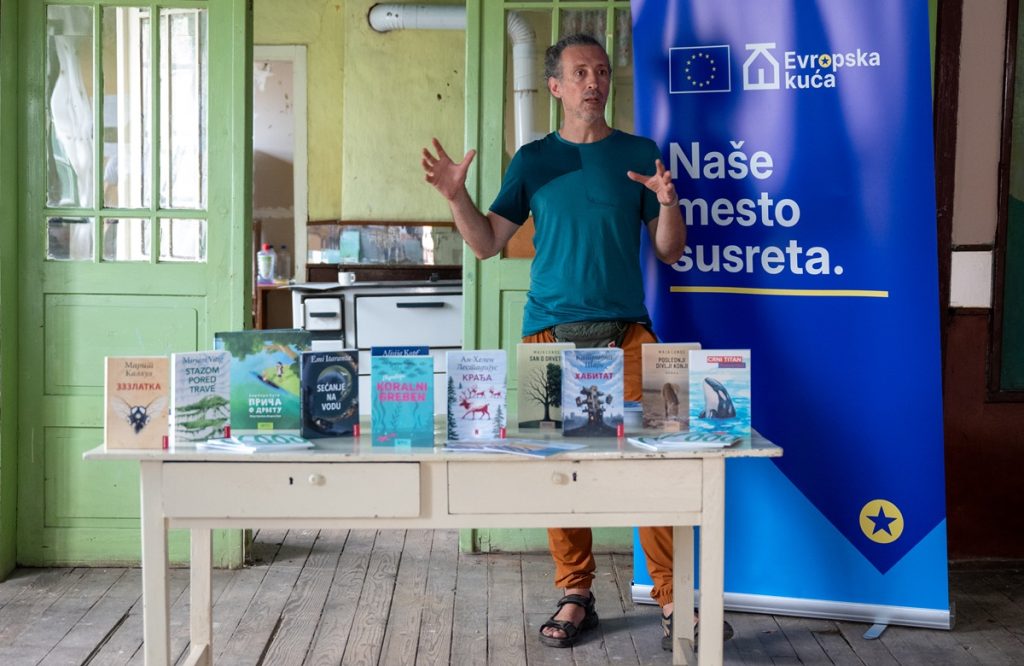
“Organisations from Serbia are very successful participants in the Creative Europe programme, but most projects are concentrated in Belgrade and Novi Sad,” explains Bojan Milosavljević from the Creative Europe Desk.
He says the programme’s presence at Jerma serves two purposes: promoting the green agenda as one of the programme’s priorities and decentralising culture by building the capacity of smaller communities for cultural exchange. For several years now, Serbia has been the most successful country in this call, with the highest number of approved projects.
One of the festival visitors connected the book she received, Memory of Water, with the place where she was standing.
“We are standing next to a river that connects Serbia and Bulgaria, but also connects all of us through one common theme: water. Without water, there is no life,” she noted.
As a non-profit event, the Jerma Art Festival brings together art, nature and community, gathering artists, researchers, activists and local residents to explore sustainability, respect for nature and creative ways of living in harmony with the world around us. The festival features art, performances, music, workshops, lectures and environmental projects. All activities aim to bring people together and encourage creativity, collaboration, solidarity and respect for nature.