

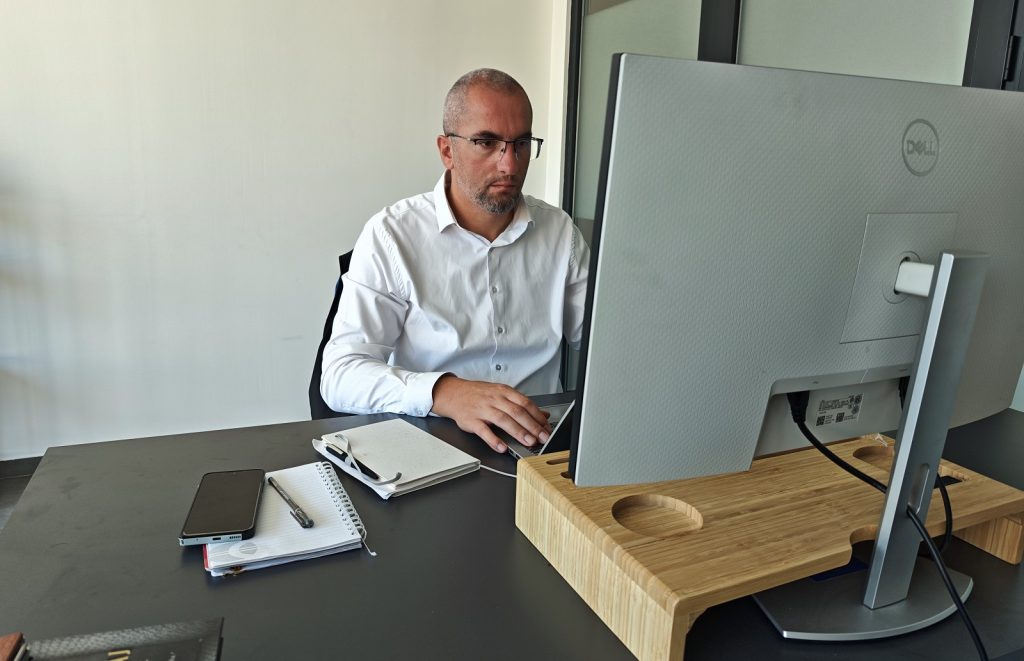
When people think of working in the IT sector, they often picture a modern office in a distant metropolis or someone working alone from their bedroom. Software engineer Faris Mecinović from Novi Pazar chose a third option: he stayed in his hometown and is building an international business from there.
The founder of software company Bonislabs develops web applications and business systems for international clients, but has no plans to pack his bags. His base is the largest Regional Innovation Startup Centre (RISC) in Serbia, built and equipped with support from the European Union.
“IT allows us to work for clients practically anywhere in the world while staying in our own city,” says Mecinović. “You don’t have to move to Belgrade or a major European city to work on good projects. And when you have like-minded people around you and a place like RISC, you feel much less like you’re missing out.”
Mecinović has been building his career in the sector for several years and founded his company in 2022.
“When I was starting out, I worked from home. It’s practical at first, but after a while you miss having a working environment and contact with people. At the Centre, I didn’t just get an office, but also people I could talk to, exchange experiences with or simply socialise with. That makes a big difference to everyday work,” he says.

His advice to anyone considering a career in IT is to start as soon as possible, focus on practical skills and connect with others.
“You don’t have to do everything on your own, and you don’t have to leave your hometown to build something serious. If we have a strong community, we all have many more opportunities.”
From an Attic to Serbia’s Largest Centre
That Faris’s story is no coincidence is confirmed by Šemsudin Plojović, director of RISC. It all started with the idea of giving young people opportunities to work in innovation outside the country’s major university centres. The initiative gained real momentum in 2019 through the European project EUBID (EU Support for the Development of Business Incubators), which enabled the team to build its capacity and learn from similar centres across the region.
“The beginnings were modest, in the attic of the University of Novi Pazar, with 16 students attending our first training courses. They all found jobs before even completing the course, and today they are successful engineers in senior positions,” Plojović recalls.
For years, the Centre operated from rented premises until its own building was constructed and equipped as an extension of the Cultural Centre in Novi Pazar. Part of the equipment was funded by the European Union through the EU PRO Plus programme. According to Plojović, the programme also provided technical support, knowledge and skills that the team had previously lacked.
“That was extremely important. The programme also provided key training for our start-ups and project team.”
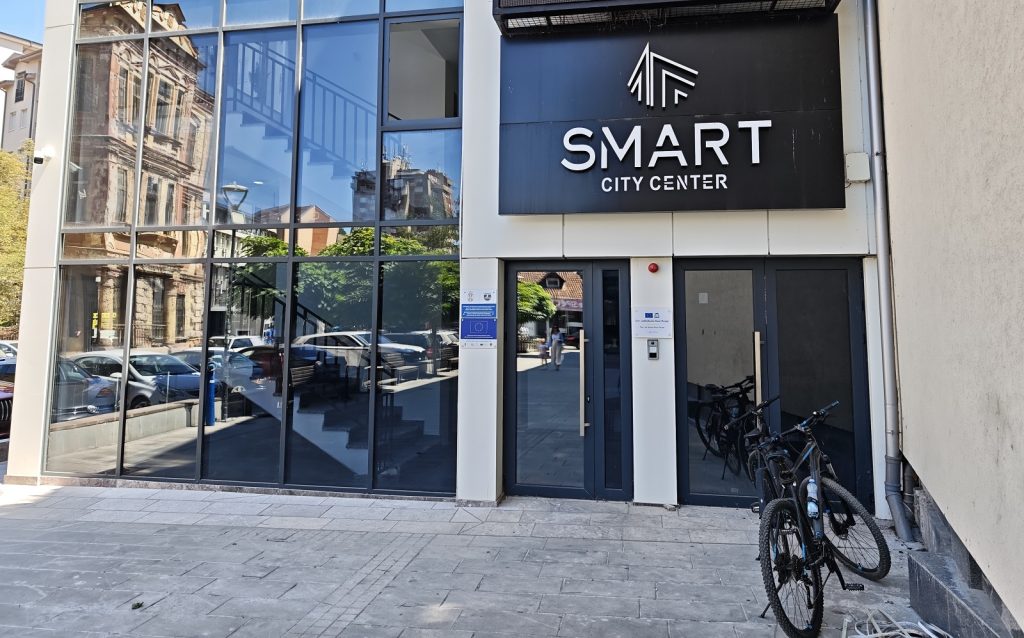
Today, RISC is the largest regional innovation centre in Serbia by floor space, covering 1,300 square metres. It brings together 12 start-up companies, established businesses and entrepreneurs who receive free support, as well as young people and citizens taking courses in software development, video game development, graphic design and starting a business.
“Last year, we compiled a list of more than 350 people who completed our training programmes and are now working in the industry. So far, around 1,500 people have gone through our intensive, long-term training programmes, while more than 10,000 young people have taken part in our workshops,” says Plojović.
Success has brought a welcome problem: the Centre is now full, with no offices available. The next goal is to build a Science and Technology Park of between 5,000 and 6,000 square metres, for which a location has already been secured.
“Our next major goal for the next three years is to build a Science and Technology Park covering between 5,000 and 6,000 square metres. The local government has already designated a site. Now we need to prepare the project documentation and work on advocacy and applications for funding. We need this space to enable young people to stay in Novi Pazar, continue doing creative work and earn above-average salaries,” Plojović concludes.