

Old clothes can become a new fashion item, leftover food a tasty meal, and worn-out shoes and bicycles do not have to end up in the bin. That is what students and residents of Novi Pazar saw on 9 and 10 November at workshops held as part of the “Worth Keeping” campaign, implemented by the “EU for Circular Economy in Serbia” project.
“Through these activities, we can see how European Union support can help bring about tangible changes in local communities through the circular economy. By working with young people, craftspeople and local businesses, we help preserve valuable resources, strengthen traditional skills and keep materials in use for as long as possible. This brings tangible benefits: less waste, new business opportunities and a cleaner environment”, said Mauro Di Veroli, Head of Cooperation at the Delegation of the European Union to Serbia.
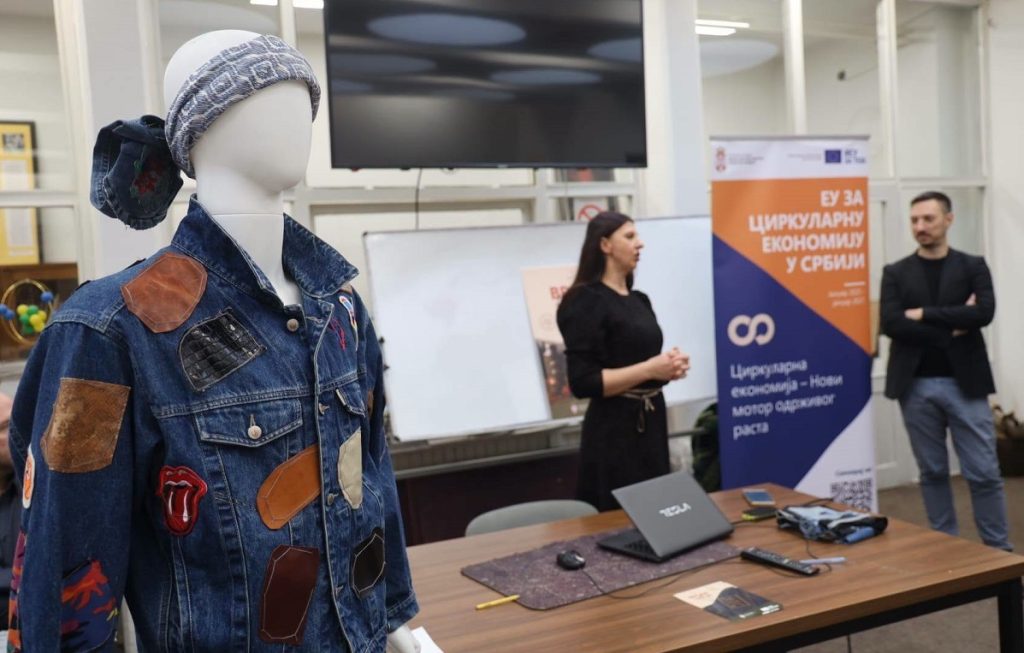
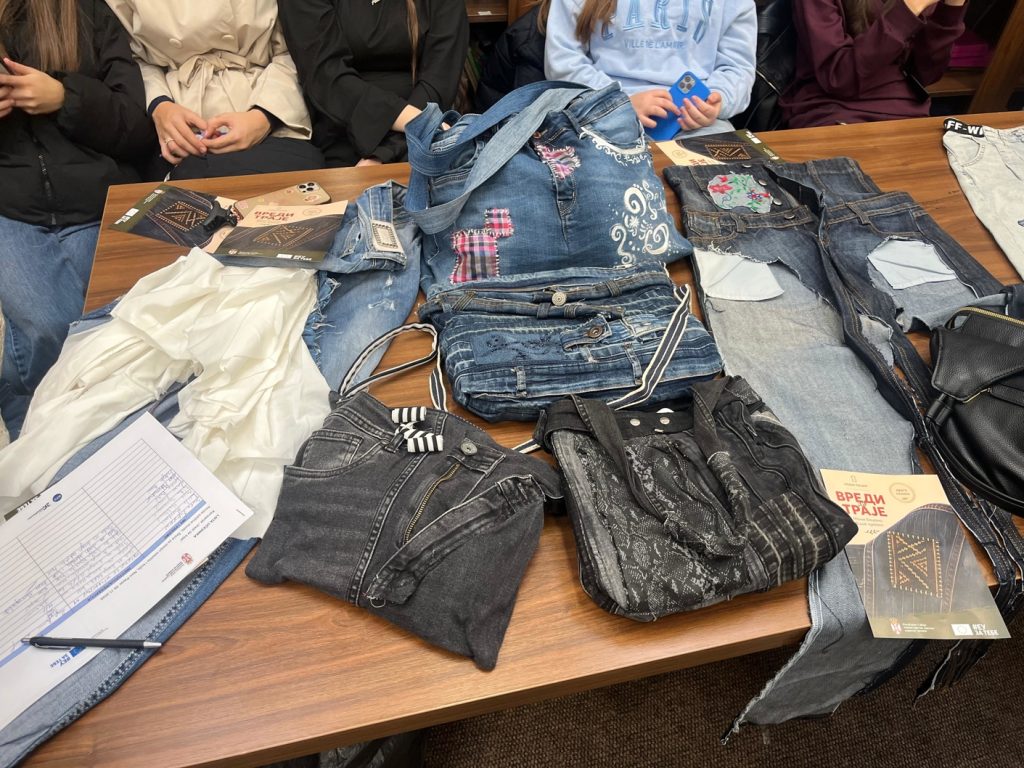
The programme opened with a sustainable fashion show at the School of Textile and Leather Design. Students presented clothing and accessories made from old garments and discarded materials, and old denim became the basis of their creations, showing what sustainable fashion means.
At the “Izudin Šušević” Technical School, students took part in a workshop on repairing small household and electronic appliances, showing through hands-on work that a small repair can extend the life of a device, without throwing it away and buying a new one.
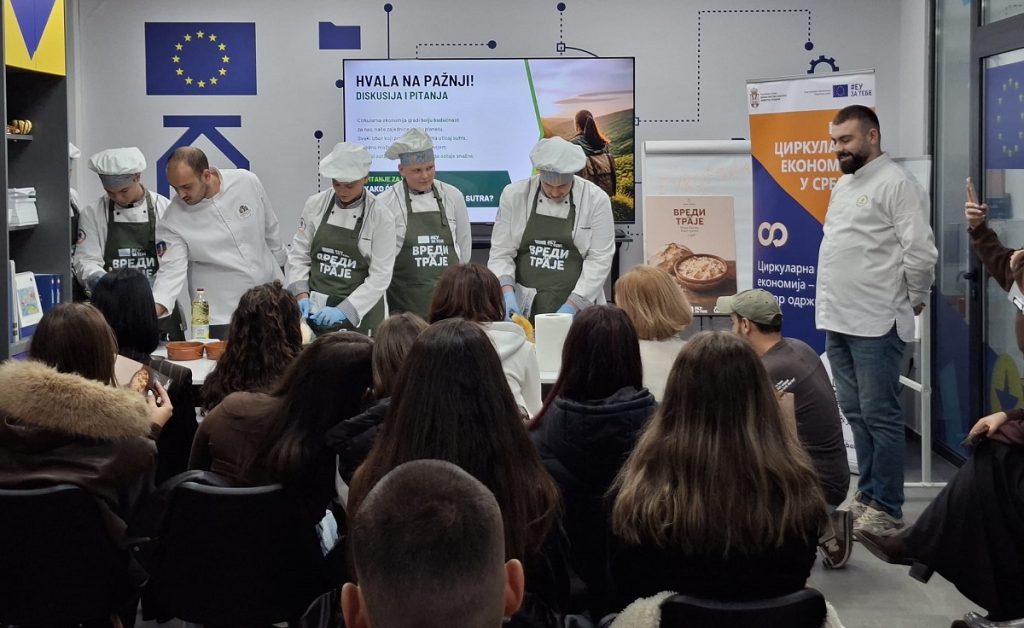
Students of the School of Hospitality and Tourism prepared tasty dishes from leftover food at Europe House Novi Pazar, as part of the “Zero-Waste Kitchen” cooking challenge. They showed that throwing away large amounts of food can be prevented with a little knowledge and imagination.
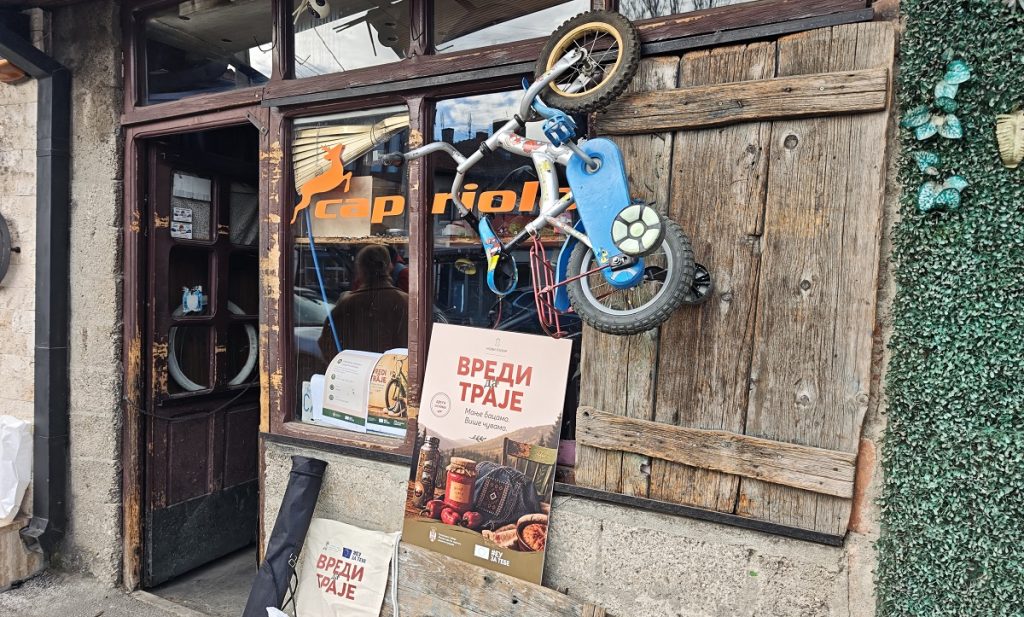
On the second day, craft skills moved to Novi Pazar’s Old Bazaar (Stara čaršija), where residents could bring shoes and bicycles for completely free repairs. The craftspeople showed how important artisans are for extending the life of the things we use every day.
“In the last two or three years, the use of bicycles in Novi Pazar has increased significantly. Simply, it is cheaper than a car and healthier. There are also many people who ride older bicycles, some for decades, since their youth. Many customers are really attached to their bicycles, which is why small repairs and maintenance are very important to keep them going”, says repairman Edin Ćurkić.
In a city whose traditions and identity are closely linked to textiles and craftsmanship, these activities brought together the knowledge of younger generations and the experience of local craftspeople.
Novi Pazar is one of five cities in Serbia taking part in the project. The local government has signed a memorandum of cooperation and is working to align local policies with the principles of the circular economy.
“Workshops like these are the beginning and the foundation of the development of the circular economy. If we raise awareness, especially among young people but also among all other citizens, and encourage lifestyle habits in line with its principles, we can solve many problems or prevent them from arising in the first place”, said Malića Plojović of the Novi Pazar City Administration.
Aleksandar Obradović, representative of the project’s communication component, noted that the circular economy is not a new concept in our society, but is already present in everyday life under other names.
“It is something we apply every day, but we are not aware that it is the circular economy. With these free repairs, we wanted to remind the citizens of Novi Pazar that this is an important element of preserving resources, clothing and property, as opposed to fast and mass buying”, said Obradović.
The EU for Circular Economy in Serbia project is implemented by the Ministry of Environmental Protection, with the aim of supporting Serbia’s transition to a circular economy through practical solutions that promote more responsible use of resources, waste reduction and the development of sustainable local communities. The project is implemented with financial support from the European Union.
Photos: Irfan Ličina/EU za cirkularnu ekonomiju