
How can waste become a resource? And how can environmental projects simultaneously contribute to the economic empowerment of women? Participants of the Bio-Soap Making Workshop, held at the Europe House in Belgrade, received answers to these questions, as part of the EU Green Week.
Workshop was organised by the European Investment Bank (EIB) and the BIO IDEA Association, in partnership with the Europe House, and brought together representatives of international organisations, state institutions and civil society, as well as citizens interested in sustainable production models.
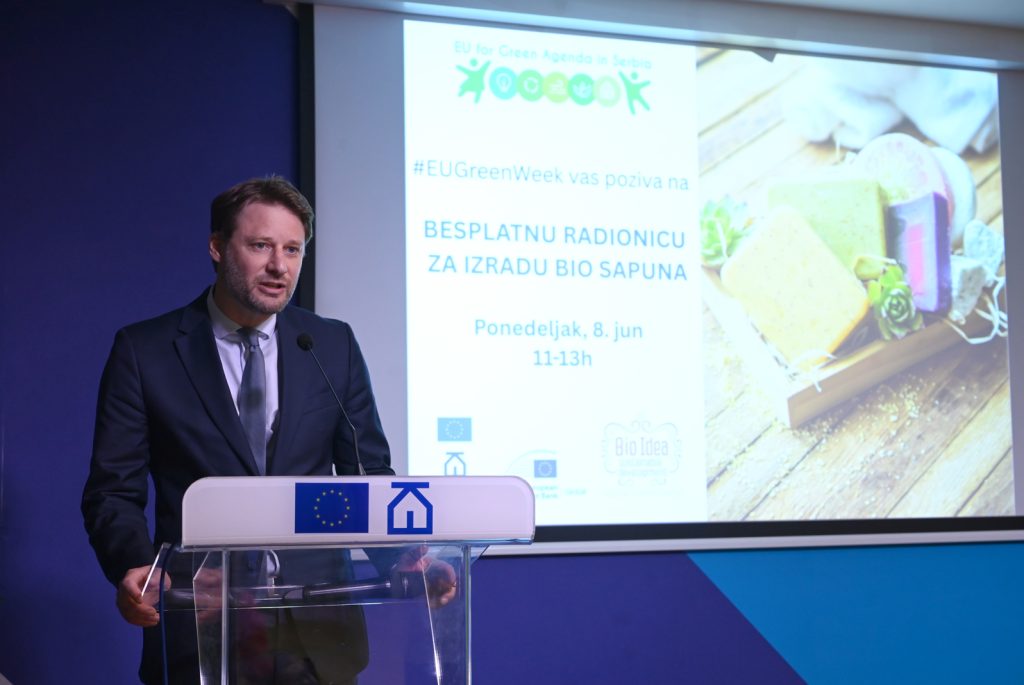
“The European Investment Bank strongly supports the green transition in the Western Balkans and in Serbia. The BIO IDEA project was awarded through the European Union’s Green Agenda programme precisely for its contribution to environmental protection and local communities,” said Damjan Sorel, Head of the European Investment Bank’s Regional Office for the Western Balkans, addressed the audience, stressing that the green transition is one of the EIB’s key priorities in the region.
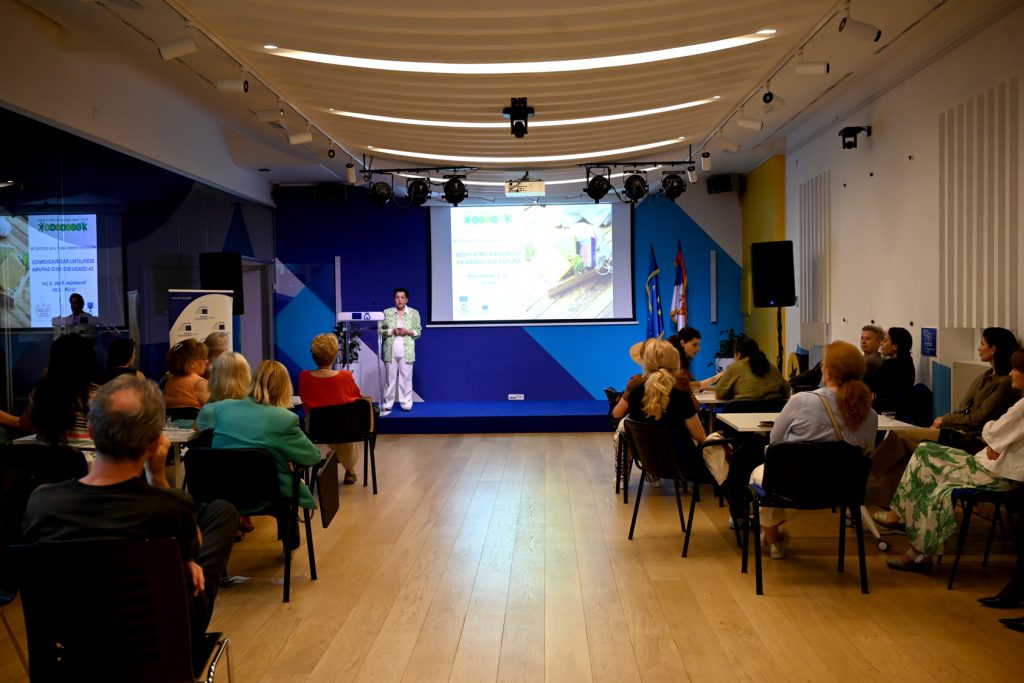
The central part of the programme was a presentation of the work of the BIO IDEA Association, which is developing a social franchise designed for women from rural areas of Serbia. Sanida Klarić, President of the Association’s Executive Board, presented a model that connects the production of traditional food, above all ajvar and preserves, with the production of natural soaps.
As she explained, women engaged in fruit and vegetable processing usually have seasonal incomes, which is why soap production was designed as an additional source of earnings throughout the year. From that need also came the idea of turning bio-waste into a resource. Particular focus was placed on the waste generated in ajvar production: around three kilograms of peppers are needed for one kilogram of the finished product, while a significant share — seeds, stems and plant residues — ends up as waste.
“Instead of throwing it away, we can turn it into a new product,” Klarić pointed out, explaining that waste in fact carries significant economic value.
In cooperation with the Institute of General and Physical Chemistry, the Association has developed a process for extracting capsaicin from pepper residues. The dried bio-waste is soaked in oil, which is then used to produce soaps intended for the care of problematic skin and the treatment of acne in adolescents.
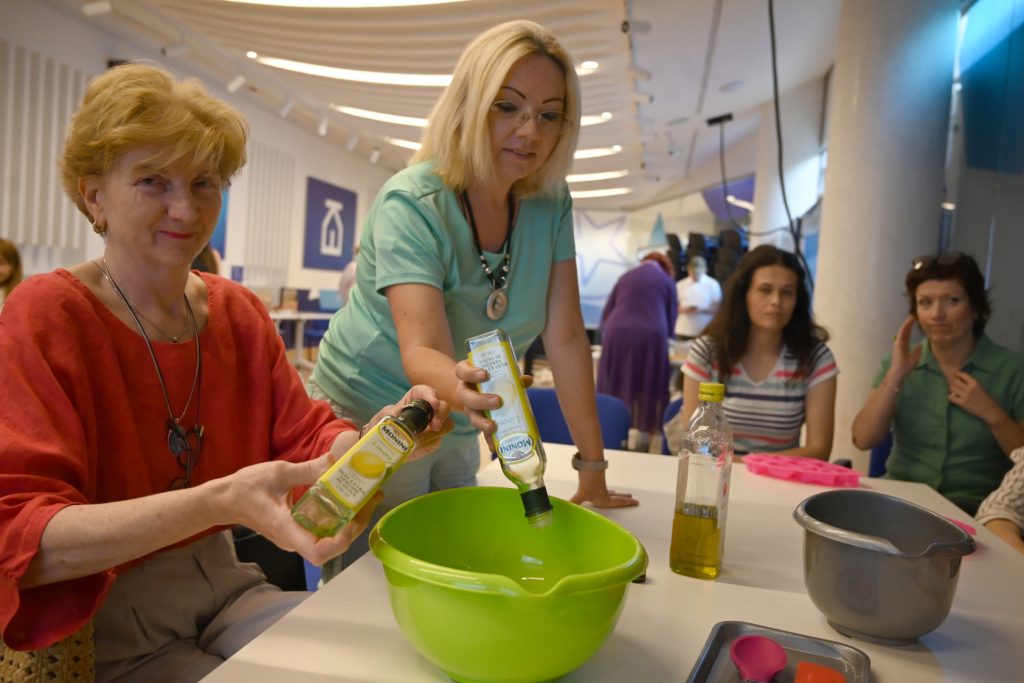
In addition to bio-waste from food production, BIO IDEA has also developed a model for processing used cooking oil from households. During the workshop, a technology for filtering the oil using zeolite was presented, after which the oil is reused in the saponification process.
“Nothing is waste until we treat it as waste. It all depends on our decision,” Klarić said, underlining the importance of changing our approach to resources.
The programme also promoted the principles of the circular economy through examples from everyday practice — from reusing packaging to reducing food waste. According to the Association’s data, the network today brings together more than 180 franchise partners across Serbia, while more than 3,500 women, mostly from economically disadvantaged areas of southern Serbia, have completed its training programmes.
One of the workshop’s messages was that sustainability does not have to remain merely a concept — it can also become a source of income. Klarić invited those interested to join the network and develop their own production through the social franchise model. As an example of good practice, an entrepreneur from the municipality of Medveđa was presented, who, thanks to this model, has expanded her production and employed several more women in her community.
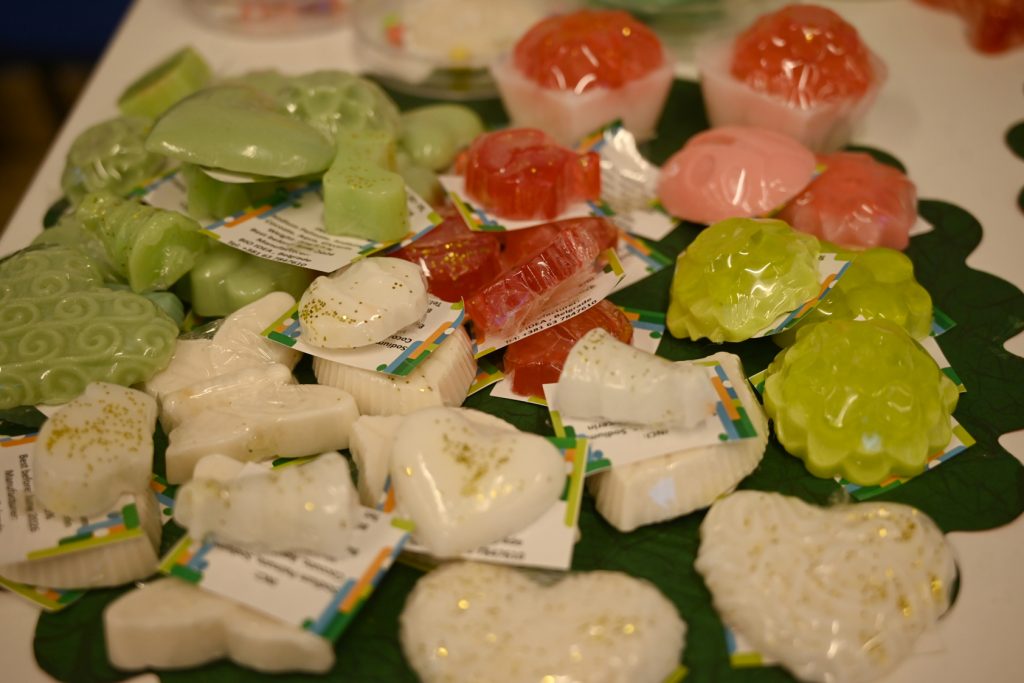
During the workshop, participants had the opportunity to follow the entire soap-making process — from the preparation of raw materials to the finished product. Various types of soap were also presented, made with medicinal herbs, goat’s milk, coffee, citrus and other natural ingredients. In parallel, an exhibition of the network’s products was organised, where visitors could see natural cosmetics and food products, and talk to the women producers about opportunities to join the programme.
The project is supported through the EU for Green Agenda programme, implemented by UNDP together with the European Union, the EIB and the governments of Serbia, Sweden and Switzerland. The programme aims to support green innovations that contribute to environmental protection, energy efficiency and the preservation of biodiversity.
The event is part of the EU Green Week, which has for 25 years been Europe’s leading environmental campaign and an annual opportunity to raise awareness, promote and discuss current and future European Union environmental policies. EU Green Week 2026 invites citizens to become part of the change — through small everyday decisions that, together, can have a major impact on the future of nature and society.