
Artificial intelligence (AI) has very quickly spread into every part of modern life, and perhaps most of all into education.
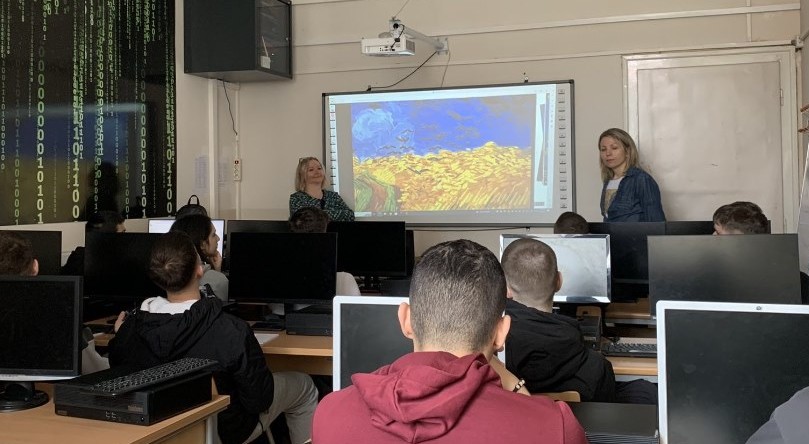
At “9. maj” High School in Niš, the arrival of AI tools was met with scepticism and mistrust, says Anica Tričković, who teaches computer science subjects at the school. To make artificial intelligence easier to understand for her colleagues and students, she designed the project “AI in the Air”, carried out through eTwinning, a European Commission programme that is part of Erasmus+. The Niš school worked with schools from Portugal, Türkiye, Georgia and Bosnia and Herzegovina. Working in international teams, students researched what artificial intelligence is and where it can be found, and presented their findings using digital tools.
“Once the students realised that artificial intelligence was being used to suggest new content or friends on platforms like YouTube, they already felt better about it. They saw there was nothing scary about it and that trying it out would not bring about the end of the world.”
The project received national and European quality labels and was named the best national eTwinning project in the secondary school category in Serbia for 2022/2023.
In the same school year, the school ran “Smart Cities” with partners from Portugal, Türkiye, Armenia, Georgia, Croatia and Bosnia and Herzegovina. The question was what makes a city smart, which cities around the world really are smart, and whether our cities meet those criteria. The result was a digital magazine, and the project also received a national quality label.
The third project, “Be well with AI”, brought together schools from nine European countries and shifted the focus from technology to the students themselves. It explored whether artificial intelligence can help students feel better and improve their mental health.