

Old jeans and denim clothing do not have to end up in landfills. With a little creativity, knowledge, and effort, they can be transformed into unique fashion pieces that also convey an important message about environmental protection. This is precisely what students from the School of Textile and Leather Design in Novi Pazar have demonstrated.
Through the process of denim recycling, the students, with the support of their teachers, turned discarded garments into new designs, showing that sustainable fashion is not only a global trend but also a way to reduce waste and make more responsible use of existing materials.
Student Adna Brničanin says that creating garments from recycled materials made her more aware of the environmental impact of the fashion industry, as she had previously believed that the textile sector did not significantly affect the environment.
“When I started working on this project, I learned how much harm new clothing and all those related processes can cause to the environment. The same was true for my friends. We realized that we do not have to throw away all our old clothes and create even more waste. Instead, we can turn them into something beautiful, which is exactly what we showcased at the fashion show”, she says.
She adds that the audience was delighted by the designs and that no one even noticed the clothes had been made from what “someone once considered waste.”
While working on the collection, the students independently developed concepts, drew sketches, sewed, and produced the garments with guidance from their teachers.
Graphic design student Lejla Spahić says the goal was to demonstrate that old clothing can be transformed into new, functional, and aesthetically appealing fashion pieces.
“We wanted to show that old materials do not have to become waste and that denim can gain a new life through recycling. Fashion can also serve as a means of creative expression. Although I am not a fashion designer, I am glad I contributed to presenting these designs in the best possible light and to proving that materials do not have to end up as waste and further pollute the environment”, she says.
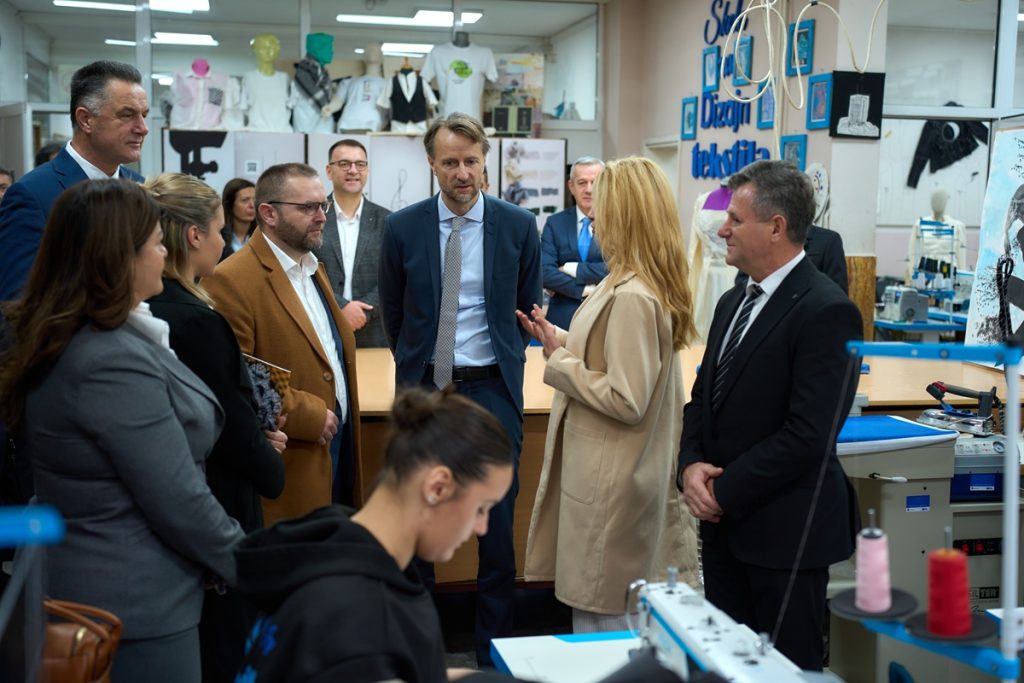
According to her, the project inspired many of her peers to look at old garments differently and consider reusing them rather than throwing them away.
The creation of clothing from old and recycled denim was part of the project “Let’s Recycle Together, Let’s Create a Sustainable Future”, implemented by the School of Design in partnership with Novi Pazar’s Public Utility Company “City Sanitation,” with support from the European Union.
Design teacher Jasmin Šabanović explains that, through creative workshops and artistic activities, primary and secondary school students demonstrated how ecology and creativity can successfully go hand in hand.
“One of the project’s main goals was to raise awareness about the importance of recycling. Producing new denim requires large amounts of water, energy, and chemicals, while recycling old jeans reduces textile waste and helps preserve natural resources”, Šabanović explains.
He adds that old denim can be repurposed into new clothing, fashion accessories, and other useful products, extending the material’s lifespan and encouraging the development of sustainable fashion and a circular economy.
“The students particularly enjoyed transforming what they had brought in as waste into completely new clothing designs. In this way, they combined creativity with a responsible attitude toward the environment”, the teacher notes.
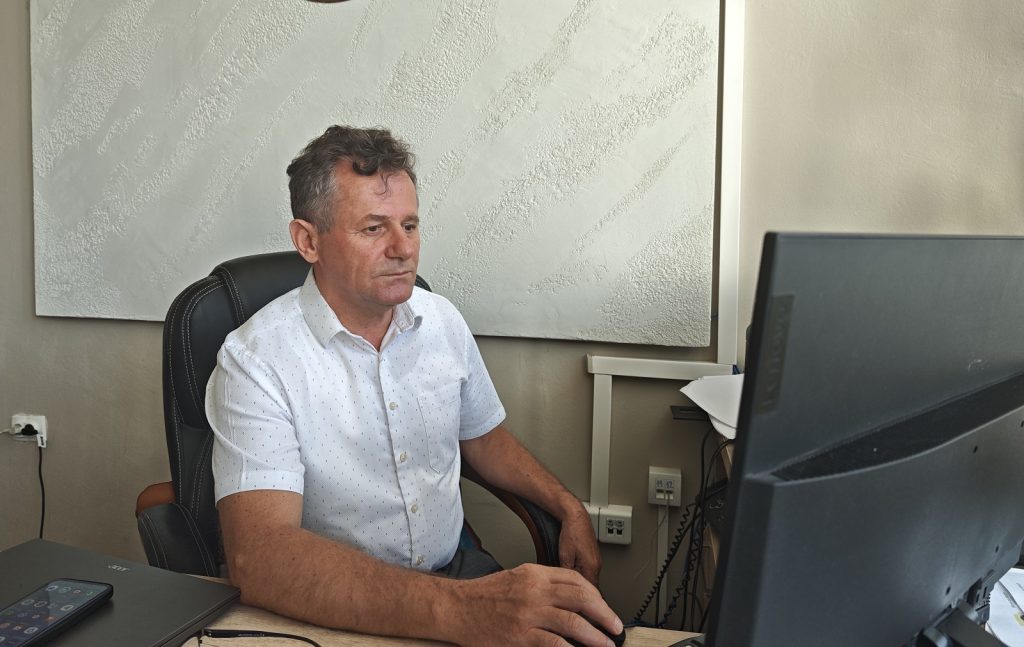
Meho Camović, Director of the School of Textile and Leather Design, believes that projects like this have multiple benefits. In addition to developing students’ professional skills, they also help build environmental awareness.
“Although I have worked in the textile industry for more than three decades, it is only in recent years that I have become fully aware of the extent to which textile production affects the environment and that textiles are among the world’s largest polluters. This project has increased environmental awareness among me, our teachers, and our students. This is especially important given that Novi Pazar is one of the most polluted cities in Europe. We all need to contribute to environmental protection”, Camović emphasized.
As part of the project, the School of Textile and Leather Design received modern equipment worth more than €20,000, which, Camović adds, has made the institution one of the best-equipped schools of its kind in this part of Europe.
Camović, who is also President of the Association of Leather and Textile Schools, shared the positive experiences gained through this project with colleagues across the country. Together, they prepared a new project this year focused on textile recycling.
“Thirty schools are participating in the project, and I sincerely hope it will be approved. It would benefit the whole of Serbia. We need support, and we would also like to establish cooperation with international partners, such as schools in Sweden, a country that is a leader in textile and wool recycling”, Camović said.