
Is applying for an exchange complicated? Do you need perfect language skills? And what do you learn from living in another country for a few months? Young people in Kragujevac, Novi Pazar, Niš and Novi Sad got their answers from those who have already been on an exchange.
The “Erasmus Chat: Skills for Tomorrow” conversations were held from 13 to 16 October as part of Erasmus Days 2026. They were organised by Europe House in cooperation with the Tempus Foundation, the Erasmus Student Network (ESN), an international volunteer organisation of former and current exchange participants, and local partners. The same questions were asked in all four cities: where to find programmes, what the application and preparation for departure look like, and which skills are gained abroad.
What did students in Kragujevac learn?
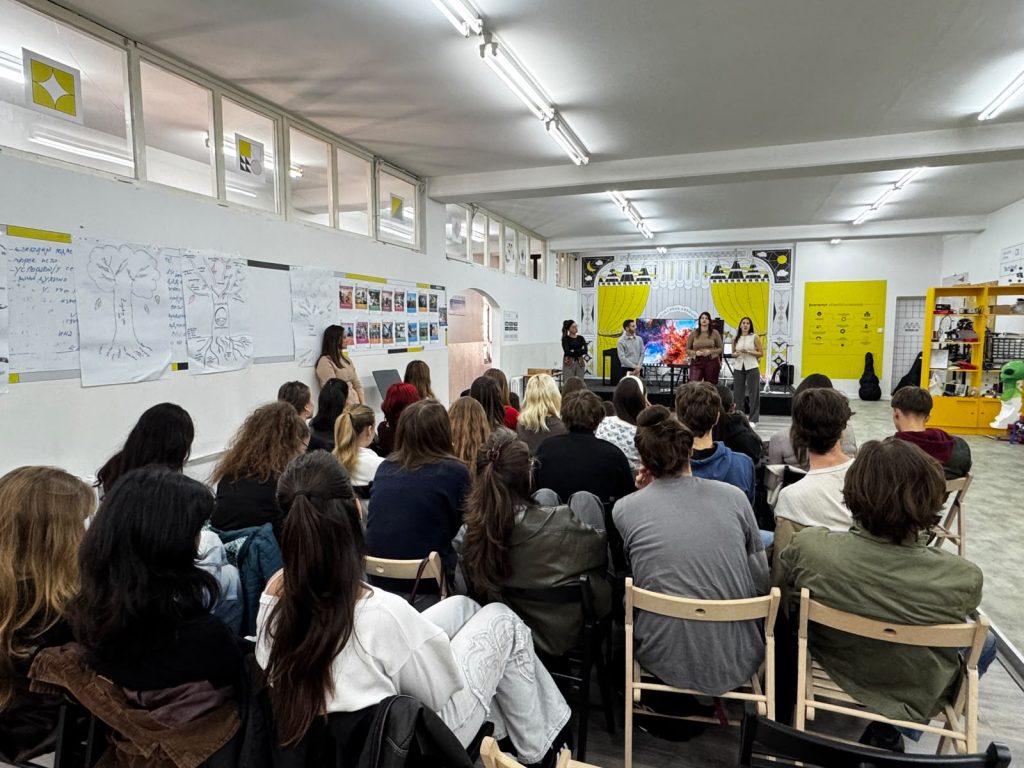
At the First Kragujevac Gymnasium, Zorana Mihajlović and Ana Milovanović, German studies students at the Faculty of Philology and Arts, shared their experience of an exchange in Germany. Secondary school students also heard what the Erasmus+ programme offers young people: student and youth exchanges, professional placements and free travel across Europe through DiscoverEU.
Meetings like this give young people a chance to learn not only what living and studying abroad is like, but also to get practical information on how to apply for Erasmus programmes and how to use the experience gained abroad to develop their careers.
Is applying for an Erasmus programme complicated?
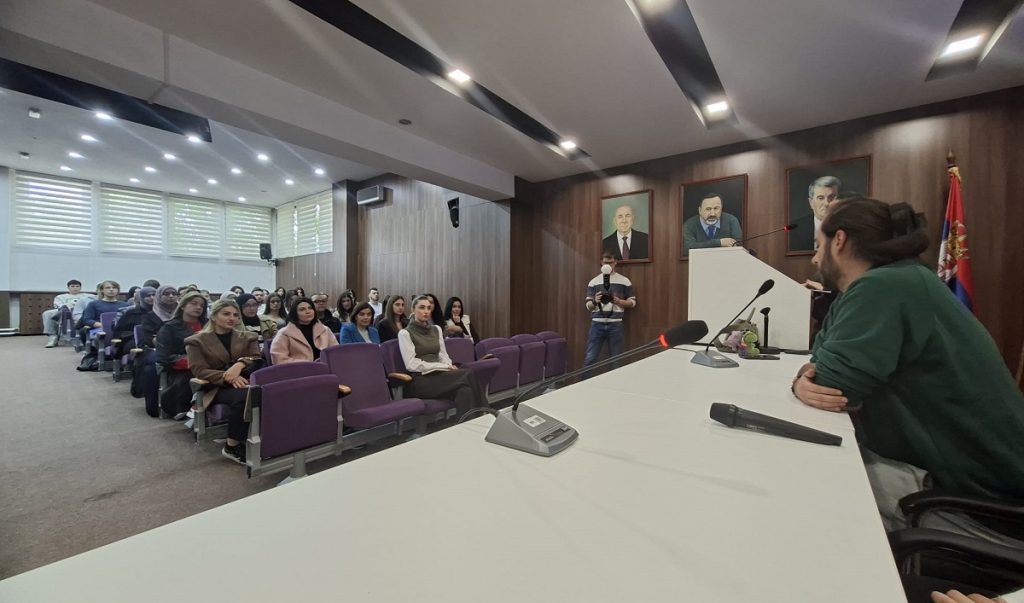
Students of the University of Novi Pazar and the State University of Novi Pazar got the answer first-hand.
Đorđe Ilić, a student at the Faculty of Mechanical Engineering in Belgrade, spent a semester on an exchange in Porto.
“The application process itself is not complicated. You should rely on the international cooperation offices at the universities in this city and find a similar study programme, so that as many exams as possible are recognised. It is also important to write a good CV and a recommendation letter, and excellent knowledge of the language is not decisive. You also receive a scholarship which is usually enough to cover all costs, although my advice is to always have some extra money”, Ilić said.
Madlen Hultén from Sweden, who studies law in Belgrade, has been on exchanges in three countries.
“The main challenge is right at the start because you arrive in another country, experience a certain culture shock, there are language barriers too, but it all passes very quickly. During exchanges you make friends, a second family. That is something not to be missed”, she added.
Marija Đorđić from ESN also explained how the network helps students: its members wait for them in the city where they arrive and help with accommodation and settling in. They do the same for foreign students in Serbia.
The Textile and Leather Design School also joined Erasmus Days with a presentation of the programme for colleagues from primary and secondary schools and educational organisations.
What does an exchange mean once you are back home?
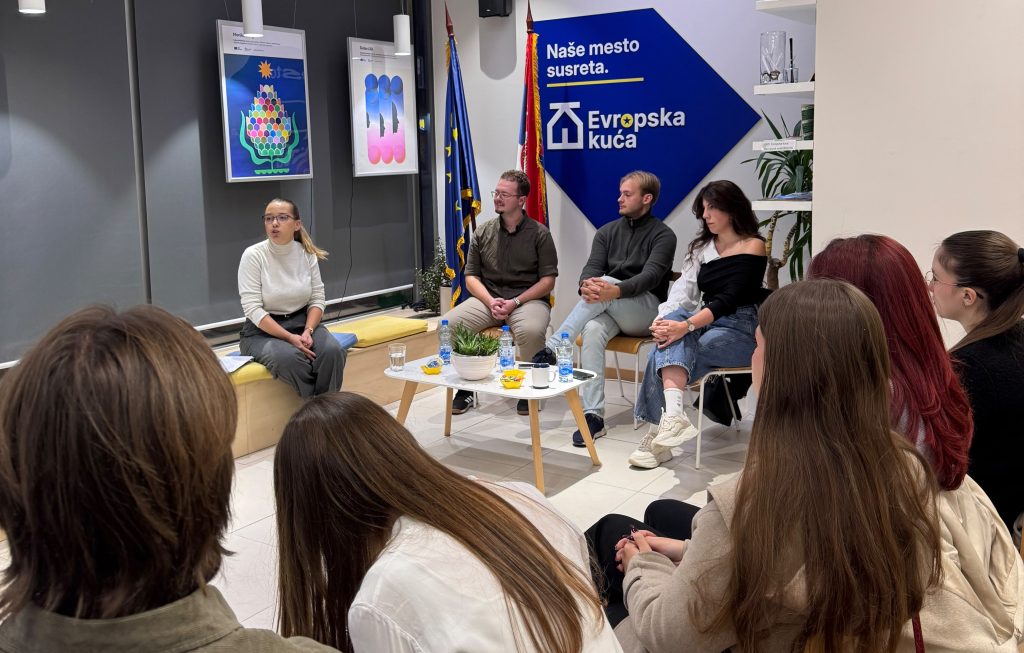
At Europe House Niš, Aleksandra Ilić, who spent a semester in Bamberg, and Mihajlo Mitić, who was on an exchange in Ljubljana and now works with young people and organises international exchanges through Centar Balkana, spoke about it. Mitić says he learned to deal with international challenges and to step out of his comfort zone every day.
“My warm recommendation to all young people who have the opportunity to take part in Erasmus+ exchanges is to do it, because this programme is the best way to spend a semester of their studies, since they will remember it forever”, he said.
Aleksandar Stojanović, Vice President of ESN Niš, added that “events like this help students learn about the opportunities of Erasmus and empower them to step out of their comfort zone”.
Where to look for opportunities and whom to ask?
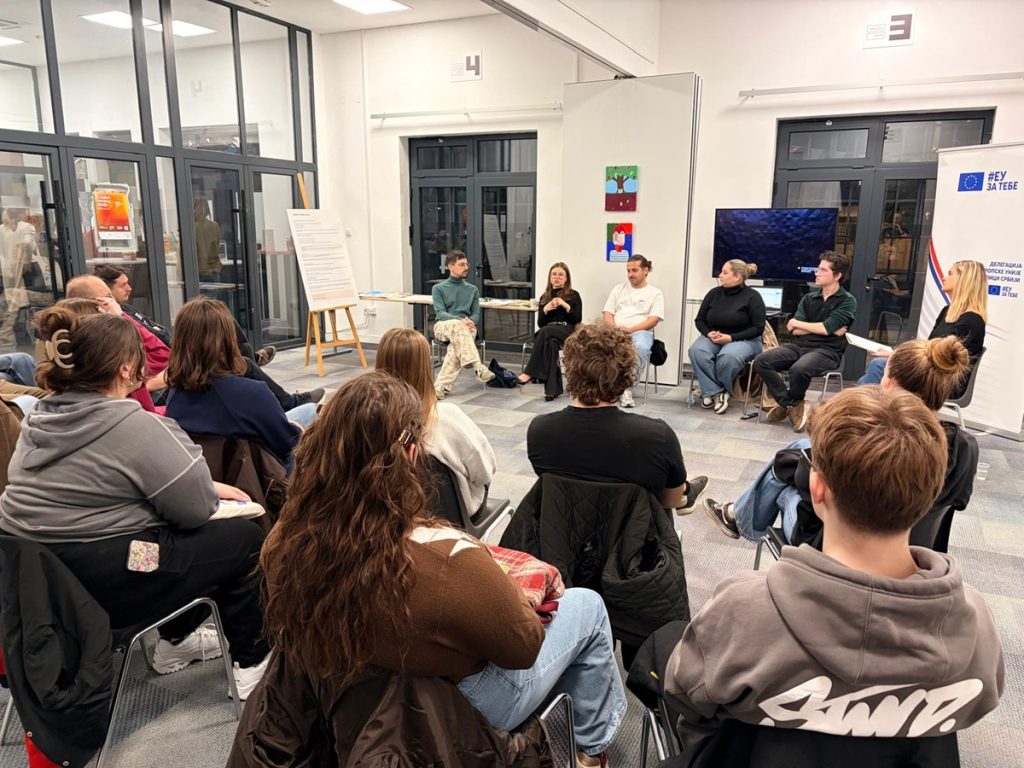
At OPENS in Novi Sad, around twenty young people learned how to get an exchange or volunteering placement through Erasmus+ and the European Solidarity Corps. Experiences were shared by Marija Murgaški from ESN, volunteers Furkan Yıldırım and Abdulkadir Kula, who volunteered in Slovakia through the European Solidarity Corps, and Youth European Ambassador Vuk Stanojev. Jovana Zarić from OPENS explained the practical steps for applying.
Participant Željana Dodić says the advice helped her plan her next steps.
“It was very interesting and I heard a lot of new experiences, something I would also like to try and experience. We heard from people who volunteered and who went on exchanges, and it especially helped us to find out where we can find information and on which websites”, she said.
The lesson of all four conversations is the same: the first step is the hardest, and the right answers are within reach. Concrete answers, the exchange of experiences and guidance towards reliable sources of information showed that conversations like these are an excellent encouragement for young people to take their first international step.
Current opportunities for young people can be followed on EU Opportunities (EU Mogućnosti).