

At the entrance to the Fortress, audiences at the Nišville Jazz Festival are greeted each year by music performed by young artists on the Museum Stage, formerly known as the Youth Stage. For many of these young performers, this is the starting point of a journey of personal and artistic development that can eventually lead them to the festival’s main stage.
The Youth Stage was established in 2014 with the support of the European Union, through the “Jazz – A Multicultural Expression” project implemented by the Nišville Foundation. Its aim was to bring together young musicians from across the region, giving them an opportunity to perform together, learn from one another and build connections. Since then, almost 100 bands and around 1,000 performers have taken the stage. Since 2019, the stage has been located at the very entrance to the Fortress, in front of the Jazz Museum, giving young bands and performers greater visibility.
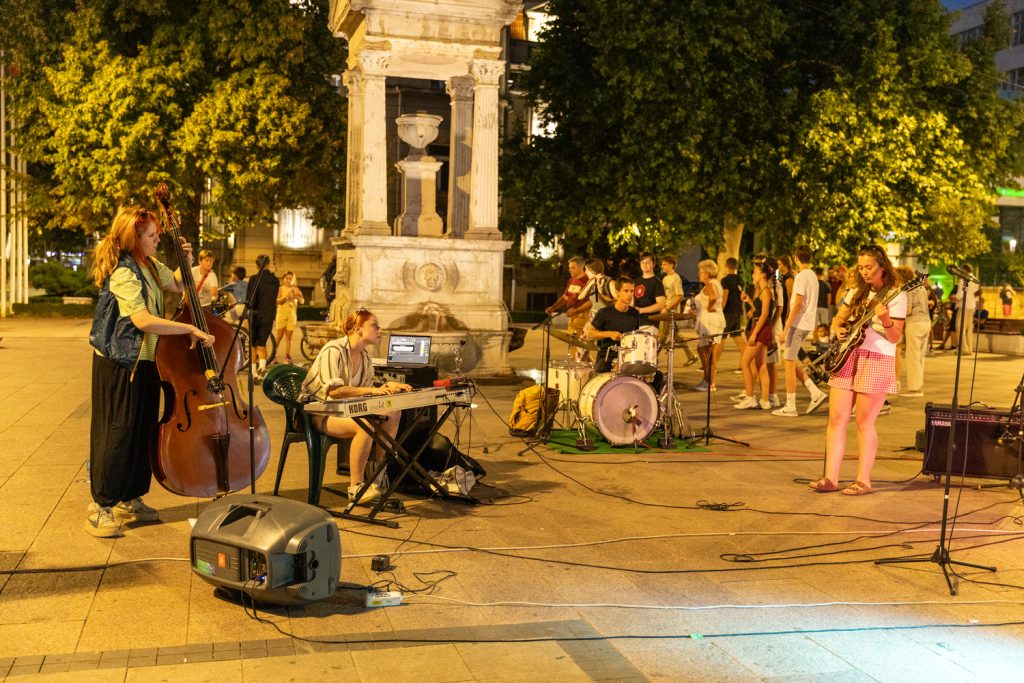
Anđelija Vučurović first performed on the stage in 2022 as a member of a cover band. Today, she is the lead vocalist and songwriter of Richard II, a band whose original music combines elements of neo-soul, R&B, funk and rock. At this year’s festival, the band performed its debut album for the first time.
“We timed the premiere of the entire album to take place at Nišville, to close the circle, because this is where we started,” says Vučurović. “The songs I wrote contain many elements of our city, its people and mentality, so it was a real pleasure to premiere them here.”
Her first appearance at the festival, however, happened by chance. She was invited to join a group of young people from across Europe and play an instrument she had never played before.
“A friend asked me to play guitar. Honestly, I was surprised, but I accepted because I had never played it before,” she recalls. “I have to admit that I really enjoyed it. I met many wonderful people, some of whom I continued to work with. In a way, Nišville shaped both the band and my later songwriting.”
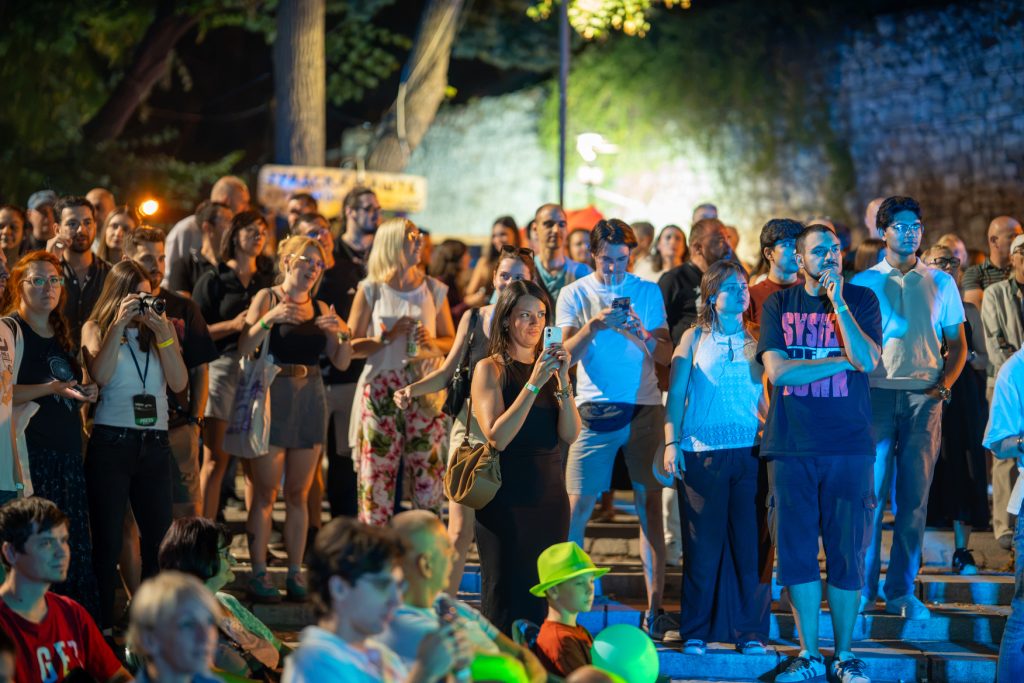
The EU’s continued support has enabled the festival to nurture generations of young musicians like Anđelija. Another is Mina Stojanović, who, through the ROJAZE (Roma Jazzing Europe) initiative, became part of a group of young musicians from Serbia, France and Belgium.
The 30th Nišville, held in 2024, saw the launch of the Nišville Jam Orchestra, a group in which Mina still performs. The orchestra was created through one of three projects the festival had implemented with the support of Creative Europe and combines jazz with the heritage of traditional folk music.
In May this year, Mina represented Nišville at a festival in Dijon, where she performed for the first time with fellow musicians from North Macedonia and Montenegro. They later brought a similar repertoire of jazz standards to audiences in Niš.
“When I first got such an opportunity, I couldn’t believe that something like that was actually possible,” she says. “When I went to Belgium and France for the first time, I was amazed. The opportunity to travel somewhere, meet musicians from other countries and then perform with them is truly extraordinary.”
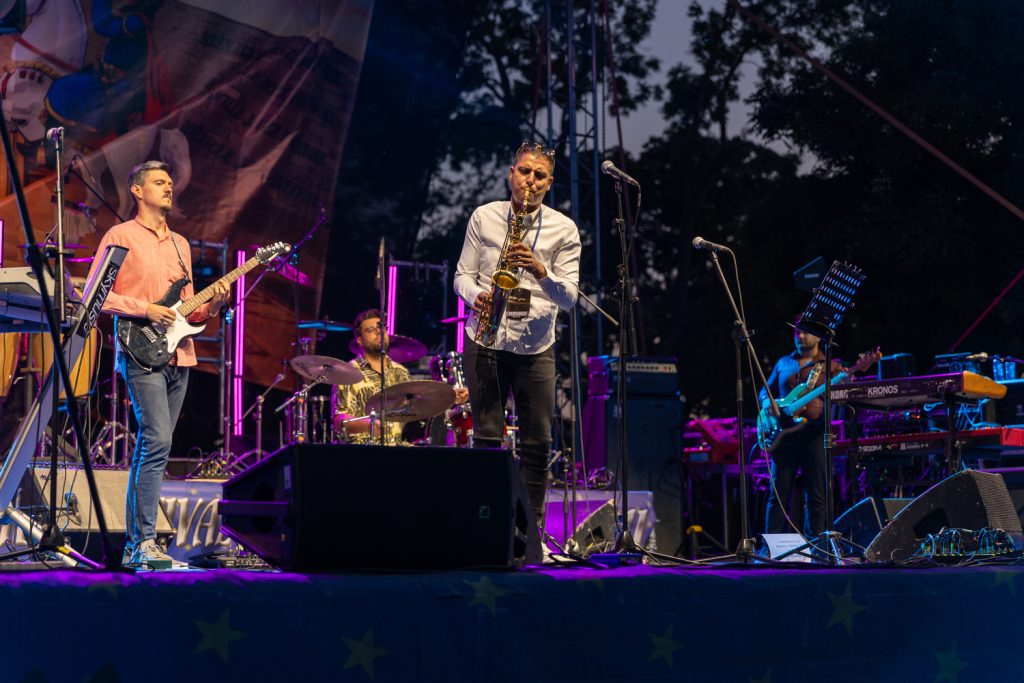
The main programme of the 32nd Nišville was, as tradition dictates, opened by a band from Niš. This year, the honour went to Dopamin, led by saxophonist and clarinettist Ivo Barčić. The band’s music brings together Balkan traditions, Roma music, jazz and contemporary sounds.
Barčić comes from a family with more than two centuries of musical heritage. He completed his formal education at the Faculty of Arts in Niš, specialising in clarinet, and released his album Awakening with PGP RTS.
“As a Roma child growing up in a neighbourhood, without Nišville I would never have discovered some of the other musical genres,” says Barčić. “As a kid, I heard different kinds of music here, saw how professional artists behaved on stage and dreamed of one day performing on the big stage.”
He says the festival’s impact can be seen across the local music scene, particularly once a year.
“When I call my colleagues in July and August, everyone is doing something, everyone is coming up with ideas and forming bands with the intention of performing at Nišville,” he says. “For a while, our city breathes inspiration and music on every corner.”
All three young musicians agree on one thing: if their original music is to break out of the local scene, mechanisms need to be found to ensure that Niš remains musically vibrant after the Nišville stage lights go out for another year.
They believe this is possible, and their own creative journeys are proof that it can be done.