

The film “3 Weeks After” (original title: “Tri nedelje posle”) by director Miroslav Terzić follows a class that goes on a school trip just three weeks after a classmate took his own life. It is based on real events and deals with peer violence, its consequences, responsibility and guilt. The domestic premiere will take place on 22 November, and the film will be shown in cinemas across the country from 26 November.
This text is one of the contributions to the November issue of the magazine Liceulice, dedicated to peer violence and its causes, not only its consequences. The issue also features conversations with children, teachers and other education workers, activists and experts, and this month’s edition was printed with the support of the European Union Delegation to Serbia.
Why was the film “3 Weeks After” made?
Fifteen years ago, the suicide of Aleksa Janković, a fourteen-year-old boy from Niš, opened the topic of peer violence in public for the first time. His parents claimed that his death was preceded by constant bullying at school, along with serious failures by those responsible for children’s safety, which was later confirmed in court proceedings.
Four years after Aleksa’s death, Liceulice writes, while Serbia was discussing a law that bears his name, another fourteen-year-old, Mahir Rakovac from Sarajevo, took his own life, according to his family for the same reasons.
A large part of the public advocated for the adoption of Aleksa’s Law, but it never made it onto the Parliament’s agenda, even though some provisions on violence prevention were adopted within existing laws.
The deaths of Aleksa and Mahir also opened the questions of failure to react, justification and complicity in peer violence among those whose job was to protect them.
The film “3 Weeks After” was made, says actor and producer Branislav Trifunović, out of a wish that this story not be forgotten.
“We wanted to extend the memory of that boy and to prevent other children from doing the same. That is what drove us to endure these ten years it took from the idea to the premiere”, he said.
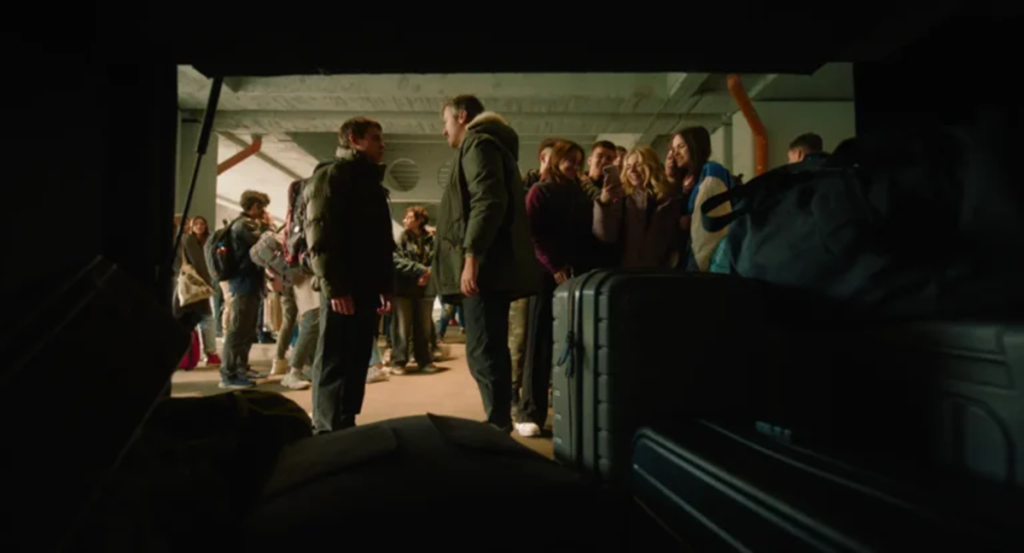
What does the viewer see on screen?
The film is a brutally realistic portrayal of peer violence and its consequences. Director Miroslav Terzić wanted viewers to feel like observers, even participants in the violence.
“Here the viewer first needs to watch what is happening, and then, it seems to me, each of us feels the need to react. The whole film was conceived from the start to ask the question: what did you do, and how would you react?”, he explained.
At the heart of the story is an entire class, twenty-five young actors, most of whom are making their first film. Before shooting, they spent time together and talked, as a real class would. Actress Anđela Alavirević hopes the film will open the conversation we need.
“I would like that, in a number of years, young people who watch this film can say that they do not identify with the problem it deals with. Until then, I hope we will all talk about this problem loudly and bravely”, she said.
The film premiered at the festival in Karlovy Vary, where it won the Europa Cinemas Label award for best European film. In Pula, it received three Golden Arenas, for screenplay, direction and editing.
What can you do if you witness violence?
This very question is at the heart of the REAGUJ campaign of the European Union Delegation to Serbia, inspired by this film.
The campaign addresses witnesses of violence, peers who may not be directly affected but can break the circle of silence. Because reacting does not mean confronting the bully. Sometimes it is enough to ask: “Are you okay?”
This text is based on the article “800+ weeks after” by Anja Anđušić, published in the magazine Liceulice.
We have also written about the new issue of the magazine in the text Don’t look away: a new issue of Liceulice with EU support.