

This October, Pirot hosted the Mental Health Festival for the first time. Twelve festival days and twenty free programmes, for children, young people, parents, adults and the elderly, were organised by the association “Gnezdo – Centre for Mental Health and Community Development”, following the methodology and with the mentorship of the Institute of Public Health of Vojvodina, which launched the festival and coordinates it in several cities across Serbia. The theme of this year’s edition was “Freedom, Security and Mental Health”, and the slogan “Safe in an (Un)safe World?”.
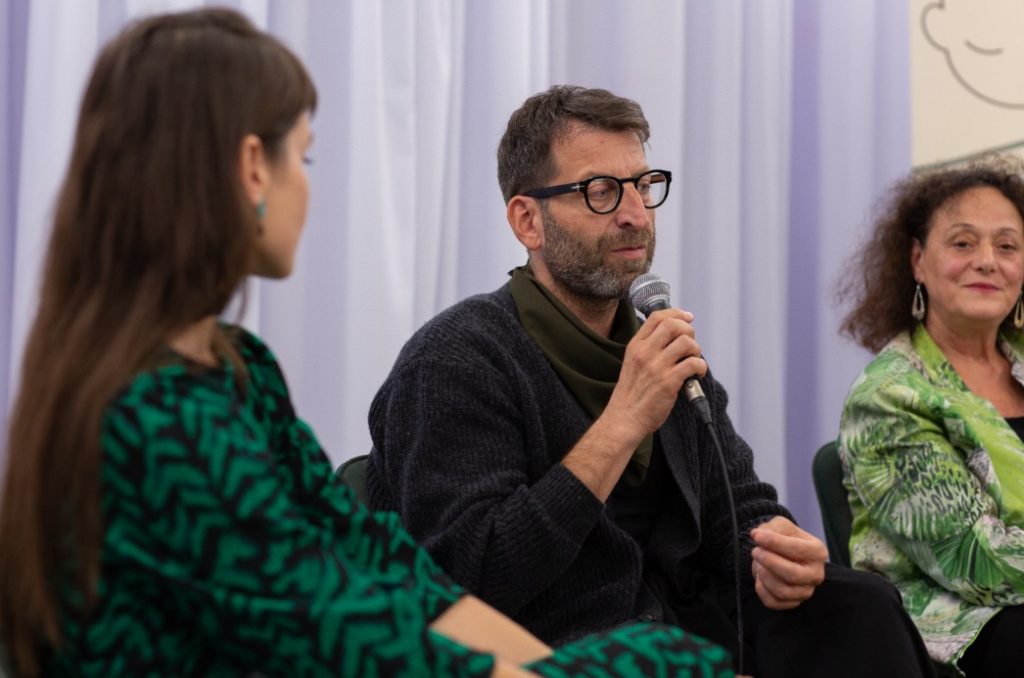
The festival opened with a panel discussion in the Glass Hall of the Pirot National Library. The participants were Čedomir Šagrić, head of the Centre for Health Promotion at the Institute of Public Health Niš; Koviljka Stamenović, a psychologist and president of the Pirgos art Association of Visual Artists; and Aleksandar Radulović, an actor and artistic director of the National Theatre in Pirot.
Why are prejudices the biggest obstacle?
The festival was preceded by a community activation phase. While flyers were being handed out around the city, many passers-by reacted with jokes, quips such as “I’m crazy too” and “he needs to get himself sorted”, with a mix of emotions, through smiles and embarrassment. Vanja Žikić of the “Gnezdo” association says this is an accurate picture of an environment where stigma around mental health still exists, and that in such an environment neither the shortcomings of the health system nor the cost of psychotherapy are the biggest obstacle, but prejudice is.
Contact was also established with secondary school students, who signed up to volunteer at the festival. After the festival, “Gnezdo” plans workshops for young people and parents, which will also involve professionals from institutions who offered to continue the work on their own. The association’s role, Žikić says, is to help carry out programmes, connect experts and organisations, and help institutions recognise the needs of their community.
“The most important thing is that the festival does not remain the project of one organisation, but becomes something the community recognises as its own. That next year we do not start from zero again, but have more people who want to take part, more collaboration and a clearer picture of what Pirot needs,” says Vanja Žikić.
What do parents learn at the workshop?
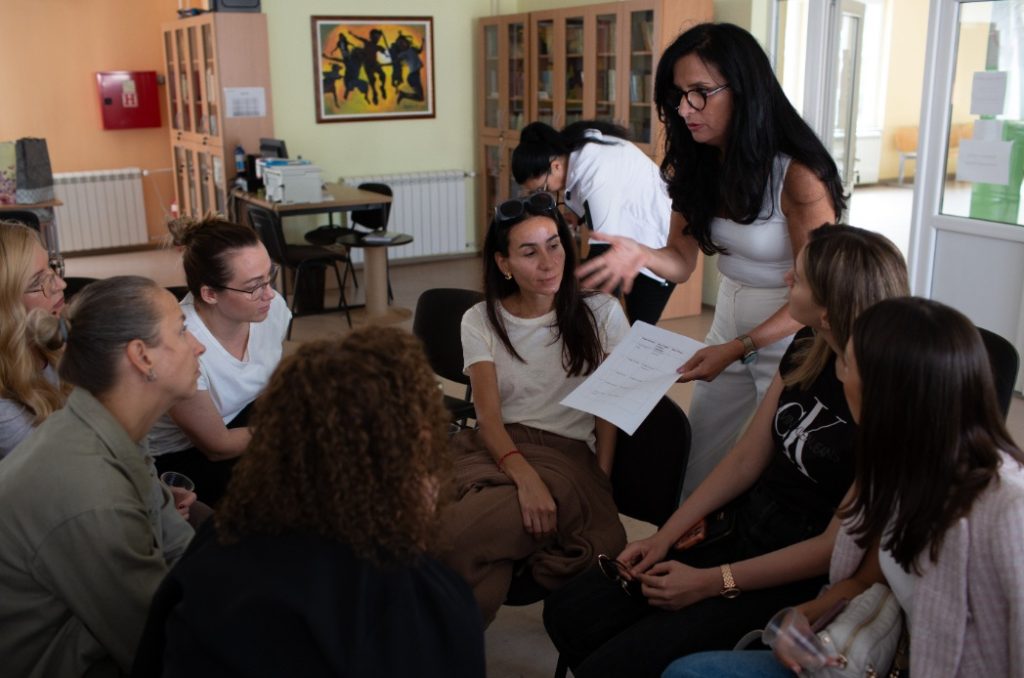
One of the festival’s programmes was the parents’ workshop “Parenting Skills – Emotional Regulation”, led by Čedomir Šagrić and Ivana Vračkić, a cognitive behavioural psychotherapist and president of the “Serbian Association of Cognitive Behavioural Therapists”.
It was not conceived as a lecture. “Information means nothing, nor does it change behaviour,” says Šagrić. The idea is to awaken the capacities parents already have and to give them simple, professionally and scientifically tested tools. Concrete situations are practised, and parents learn from one another through examples of good and bad solutions from their own experience. The tools are often very simple, yet parents had not thought about them. There are no ready-made formulas, because families, children and parents are not the same, and there is room for one’s own creativity.
“Parenting has turned into a process of constant worry,” says Šagrić. Parents find it hard to accept any departure from the pattern they imagined, so they look for security in control. “Control is always a lack of freedom,” he says.
Šagrić comes to the workshop not as a psychotherapist but as a public health expert.
“Clinical practice sees nothing until the person with a problem arrives”, he says.
Public health begins much earlier: with services adapted to young people, an education system that recognises the challenges of growing up, and organised free time. Treating an individual has limited reach if they return to the environment that created the problem in the first place.
What does the European Union say about mental health?
This approach is close to what the European Union advocates. In June 2023, the European Commission presented a comprehensive approach to mental health, based on three principles: effective prevention, access to quality and affordable support and treatment, and reintegration into society after recovery. Mental health cannot be the responsibility of the health system alone, and should be included in all areas of public policy, because it is also affected by education, work, family and community. Prevention, empowering parents and support without shame were also among the themes of the festival in Pirot.
Čedomir Šagrić’s participation in the festival programme was supported by European House Niš, which, together with the Institute of Public Health Niš, also takes part in the work of the Mental Health Club of the City of Niš. This cooperation connects experts and initiatives from Niš and Pirot, so that support for mental health can be developed in line with the needs of the local community.