
How Are Media in the Western Balkans Using Artificial Intelligence?
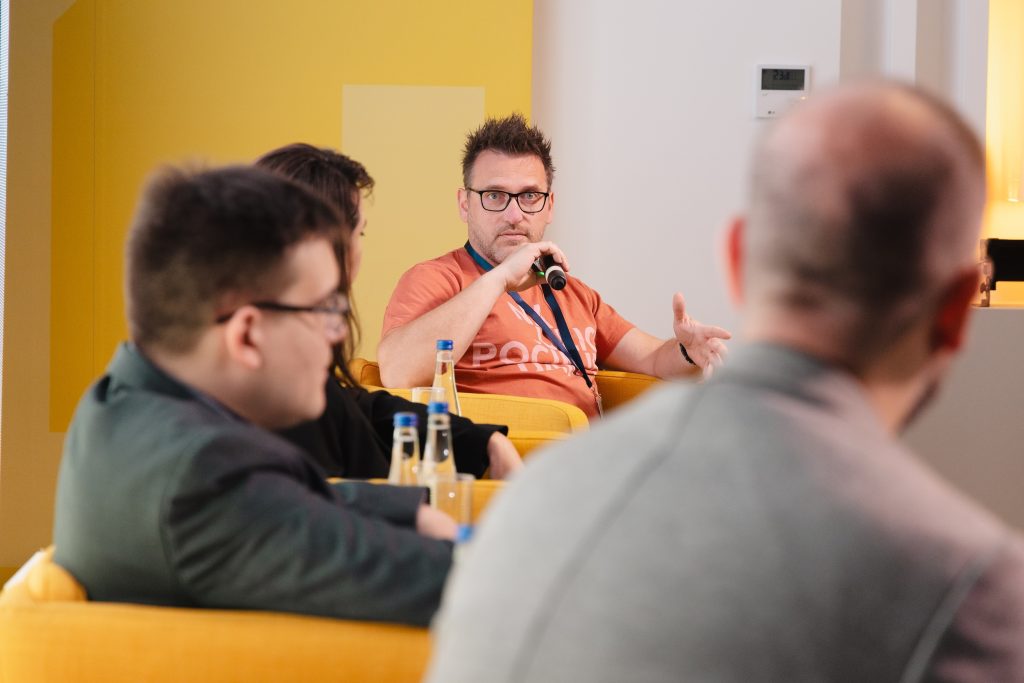
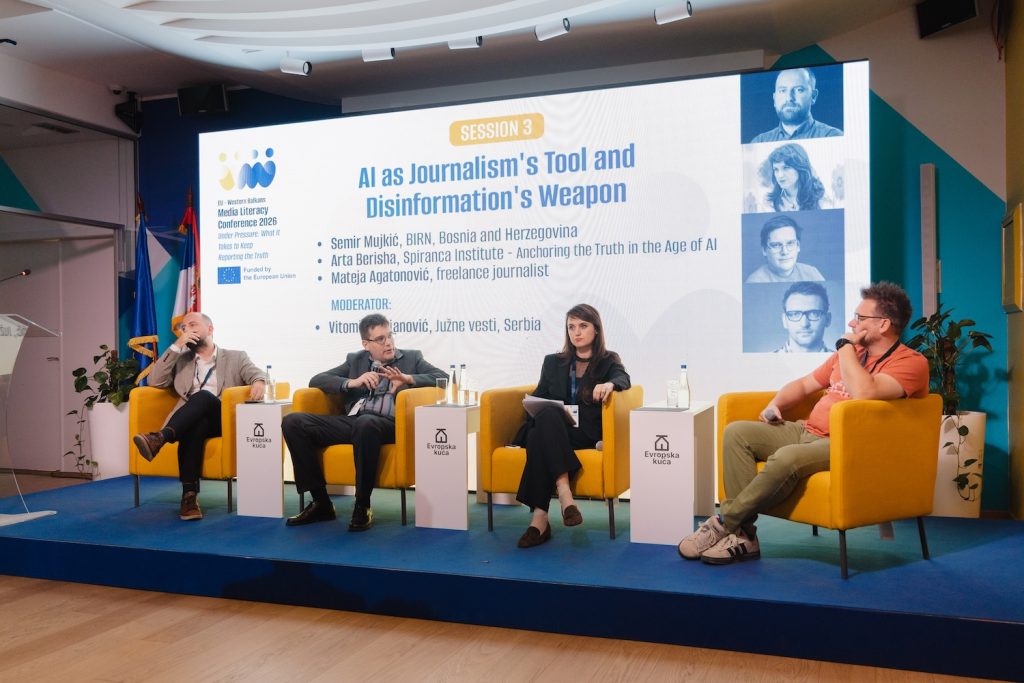
In the age of artificial intelligence (AI), the journalism profession is changing in how it writes, selects material and produces multimedia. On the one hand, journalists fear whether they will still be fully part of the writing process, while on the other they are glad that artificial intelligence saves them time. This was the conclusion of the third panel, held on 7 October 2026 at the European House in Belgrade as part of the conference “EU – Western Balkans on Media Literacy”.
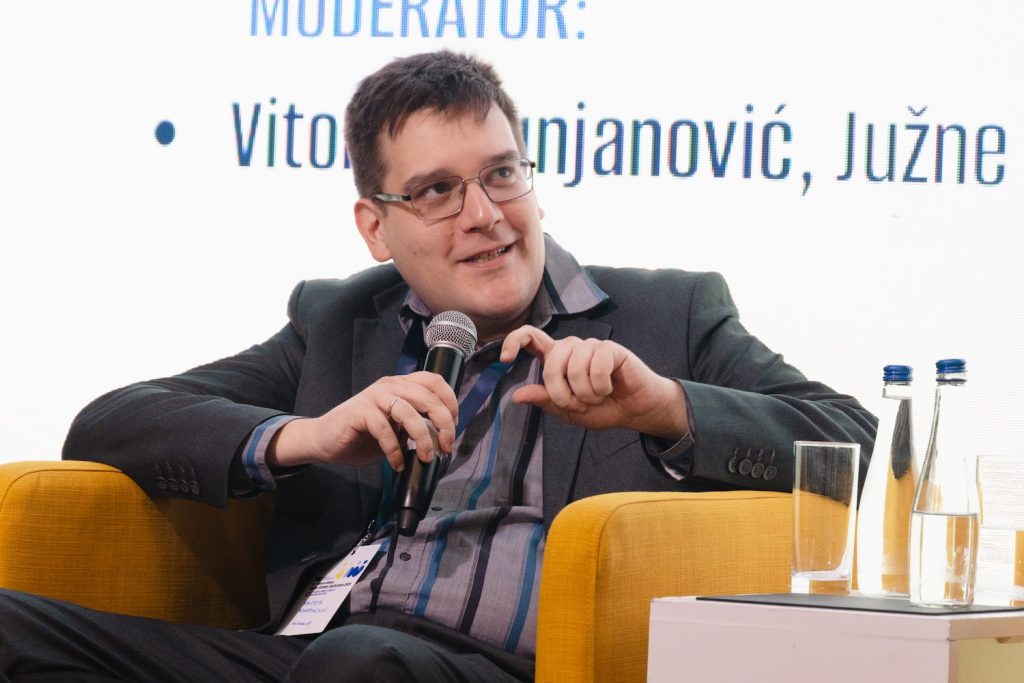
Semir Mujkić, editor-in-chief of the Balkan Investigative Reporting Network (BIRN) in Bosnia and Herzegovina, said he thought very differently a year ago, when his newsroom started using artificial intelligence in its work.
“I was sceptical. I thought some journalists would use AI to make a summary of documents instead of reading the whole document. That way, they could miss a lot of things that are useful in the full document. I thought the peak of success would be if AI made transcripts of our interviews,” he said.
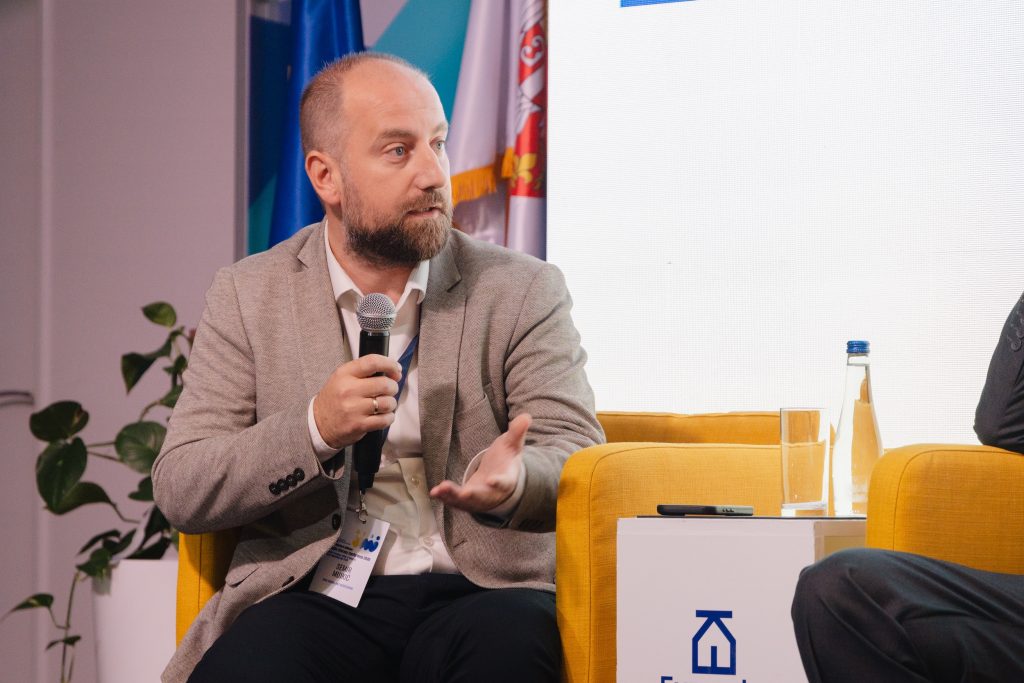
However, he said, a year later his views on the matter have changed.
“AI is the best tool journalism has ever received. All the tools we have used so far, for example for data, shortcuts and illustrations, are now integrated into one. I use AI to automate some things, such as the schedule of all the trials or hearings taking place in a single day,” Mujkić said.
He added that artificial intelligence saves journalists time on technical tasks, that AI can be used for technical support, and that it can also help one learn something new.
Mujkić noted that AI is used to analyse certain things for stories, but that everything must always be checked.
“Artificial intelligence can help us gather a large amount of information and has many advantages,” he said.
He noted that AI is not a journalist, but only a tool that helps journalists.
“A growing number of journalists are heading into ‘burnout’, and if some things can help and be automated so that this does not happen, why then should we not use artificial intelligence,” he said.
He added that journalists, especially those in daily newsrooms, are under pressure to write a large number of texts every day, and that AI can help them greatly in this work.
“With this tool we can make content more attractive to the audience. AI can back it up with video or some other multimedia. This tool should be used to improve and speed up journalists’ work,” Mujkić said.
Freelance journalist Mateja Agatonović said that, on the one hand, Serbia is lagging behind in media literacy, but that the situation is different when it comes to artificial intelligence.
“We are lagging very little there. This delay is usually tied to budgets. Newsrooms increasingly write to donors for projects that include tools based on artificial intelligence,” Agatonović said.
He said larger newsrooms around the world also have policies on labelling content created with the help of AI.
“Have you ever seen a disclaimer in Serbian media saying that at least part of a text was written with the help of AI? It is a ‘dirty secret’ that is being kept. I have not seen such a disclaimer anywhere,” he said.
According to him, such a practice exists in foreign newsrooms, that is, Western media that label on their content that it was generated with the help of AI tools.
He said he is optimistic about new technologies because, as he put it, people do not have to be media literate to know how to tell whether something was generated with the help of artificial intelligence or not. He added that the key issue in this area is data protection and privacy.
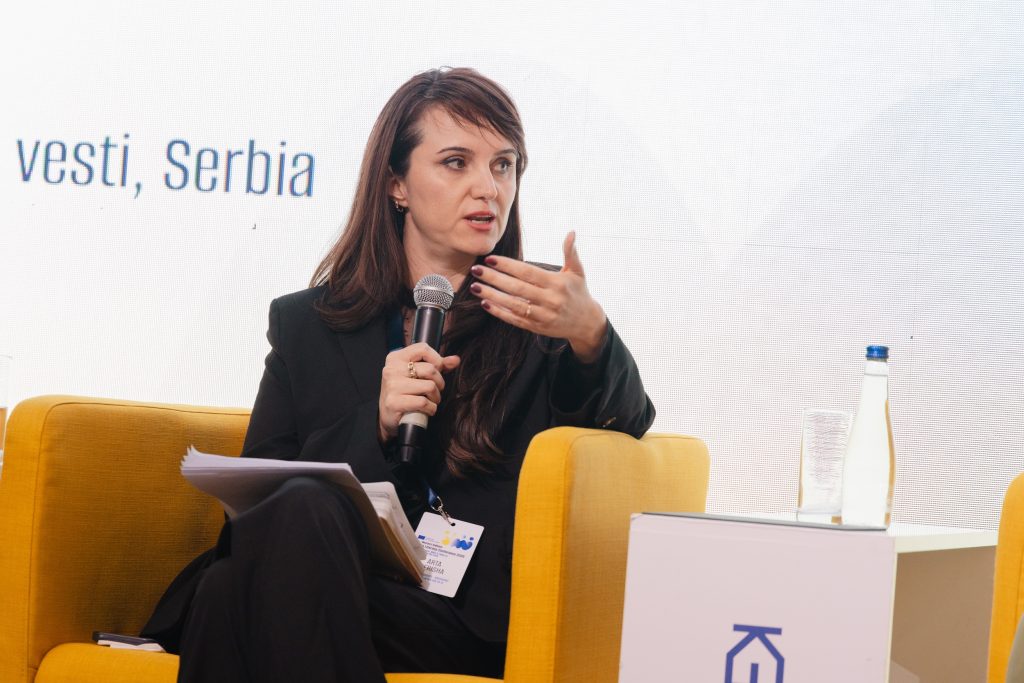
Arta Berisha of the Spiranca Institute said that AI is sometimes seen as an advantage because “a machine does the work for us”, but that some journalists feel “that is not journalism”.
“On the one hand, a journalist is happy, for example, because she does not have to do some things she used to do in the newsroom, which took up a lot of her time. On the other hand, she is not happy because she is not fully part of the journalistic story. AI changes the way media workers do their jobs, and we should ask them how they feel about it,” Berisha said.
She noted that she advocates transparency in the use of artificial intelligence, that is, she believes newsrooms that use AI in their work should openly tell their audience so.