
Fight Against Foreign Interference Risks Undermining Media Freedom in the Western Balkans
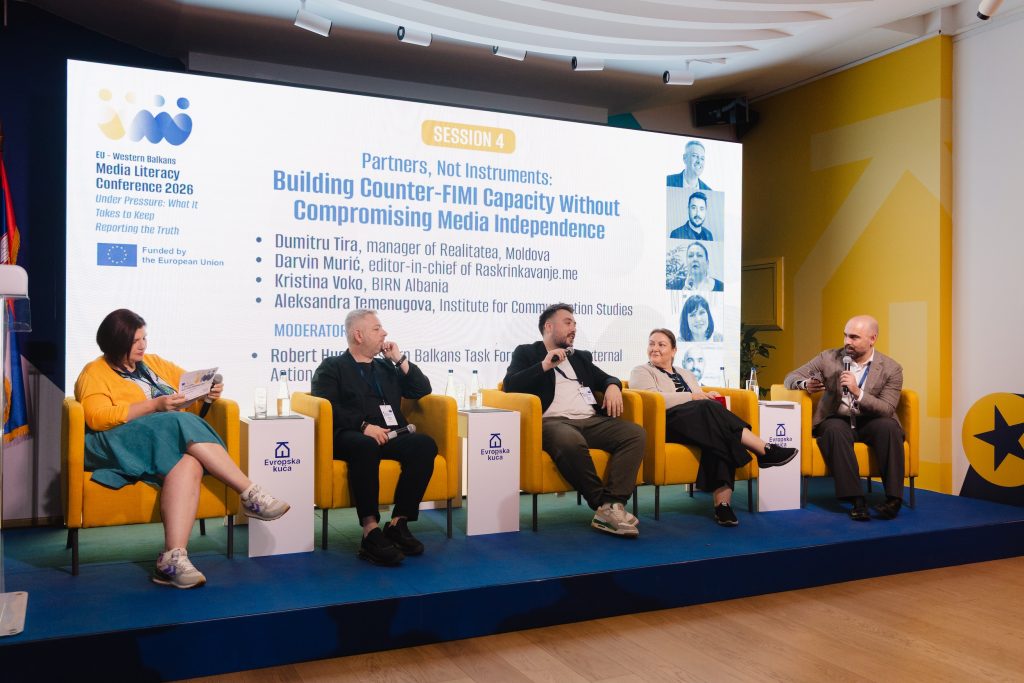
Government initiatives to counter foreign information manipulation and interference (FIMI) in the Western Balkans and Eastern Europe risk undermining media freedom and diverting attention from domestic political pressures and institutional passivity, media experts, editors and fact-checkers said at the conference “EU – Western Balkans on Media Literacy”, held on 7 October 2026 at the European House in Belgrade.
Participants in the panel on the balance between national security and freedom of expression stressed that the fight against disinformation must not serve authorities as an excuse to stifle critical journalism and introduce state control over online media.
Freedom of Expression as an Inviolable Rule
Opening the discussion on the relationship between media and public institutions, Aleksandra Temenugova, coordinator of the UNESCO Chair at the Institute of Communication Studies in Skopje, stressed that freedom of speech must remain a fundamental principle without compromise.
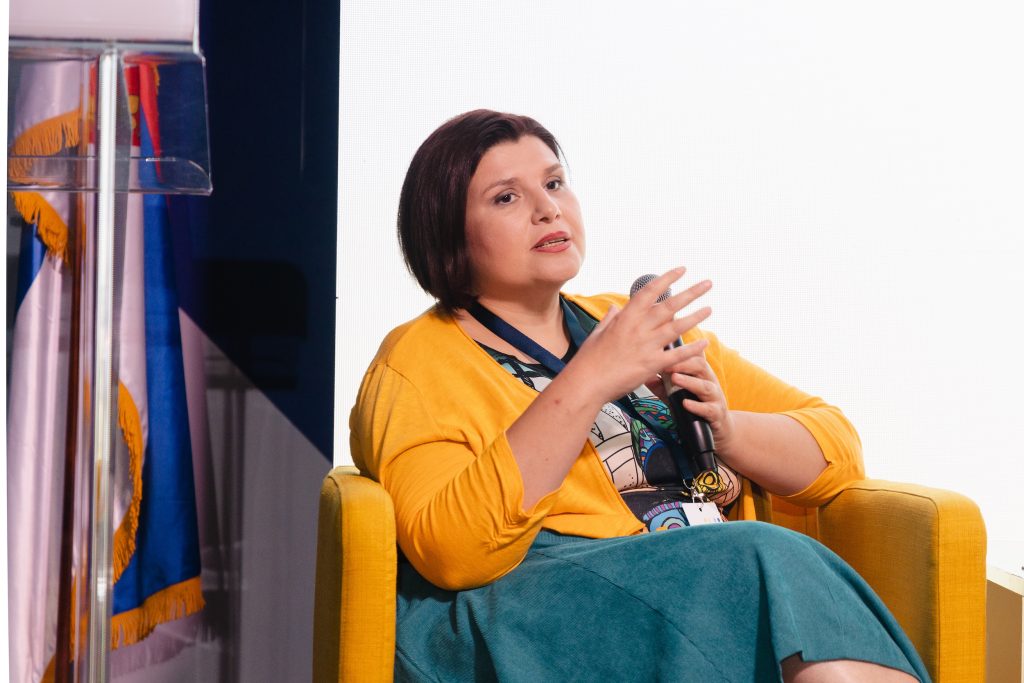
She pointed out that every actor in a “whole-of-society approach” has a role to play, but that the boundaries must be precisely defined. According to her, not every inaccurate piece of information is necessarily illegal, while accurate content can also be manipulated, taken out of context or coordinately amplified to steer public debate.
“Journalism is not a crime against the state,” Temenugova said, underlining that institutions must be transparent, and that media must be accountable and open about verifying patterns of manipulation, the channels used and the actors behind the narratives.
Moldova: Editorial Independence and Financial Sustainability
Dumitru Tira, founder of the Moldovan media group Realitatea and of the Institute for the Prevention of Hybrid Threats, shared experiences from Moldova, which is under strong pressure from Russian operations and separatist narratives in Transnistria and Gagauzia.
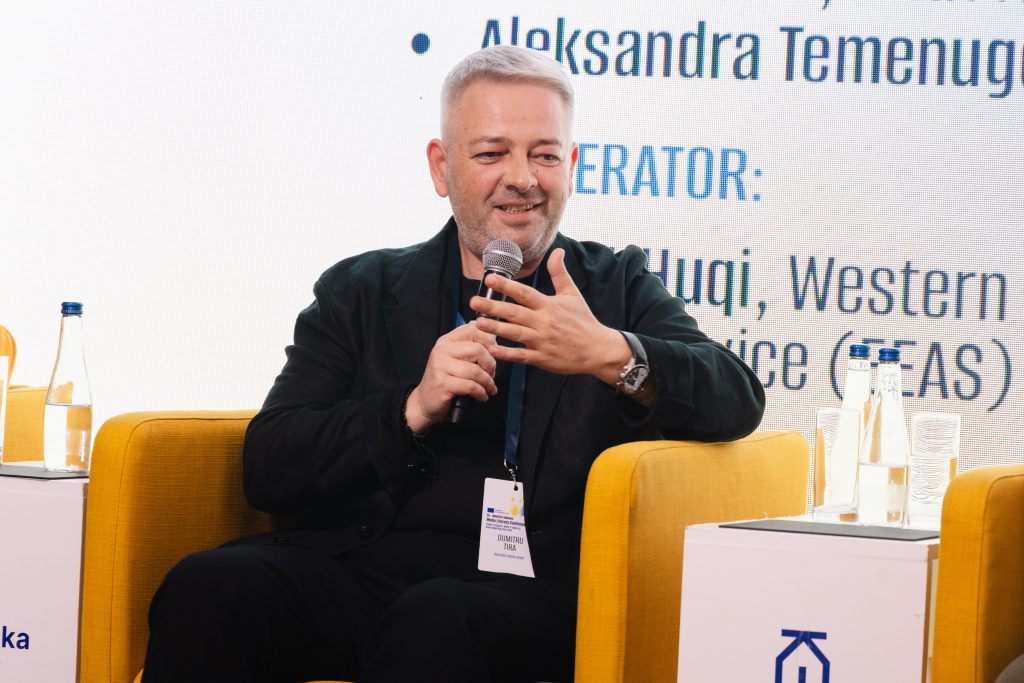
Tira, whose media house includes a television channel, a radio station, six news portals and a live-streaming platform, stressed that the survival of free media is inseparably tied to financial sustainability. He said his organisation took out a loan to buy the oldest national news agency and thereby prevent a fugitive oligarch from taking it over ahead of the elections.
Speaking about the limits of cooperation with the state, Tira said that ministries and institutions can be clients for production or technical broadcasts, but that this must never touch editorial content and news.
“If an institution such as the StratCom centre tells a newsroom that something is a matter of national security and must be published, blind trust would mean the death of that media institution,” Tira said, stressing that journalists do not work for politicians but exclusively for the public interest and social cohesion.
Albania: Domestic Problems Behind External Threats
Kristina Voko, executive director of the Balkan Investigative Reporting Network (BIRN) Albania, warned of the danger that an excessive focus on external hybrid threats marginalises essential domestic problems, such as the high concentration of ownership, the political influence of business elites and the lack of transparency.
She described the work process in the parliamentary subcommittee drafting the national strategy against FIMI, where the non-governmental sector and independent media had to strongly oppose the initial ideas about state registration and control of online portals. During the discussions, one independent state institution submitted a 350-page report in which it labelled as “disinformation” every critical media article ever published about its work.
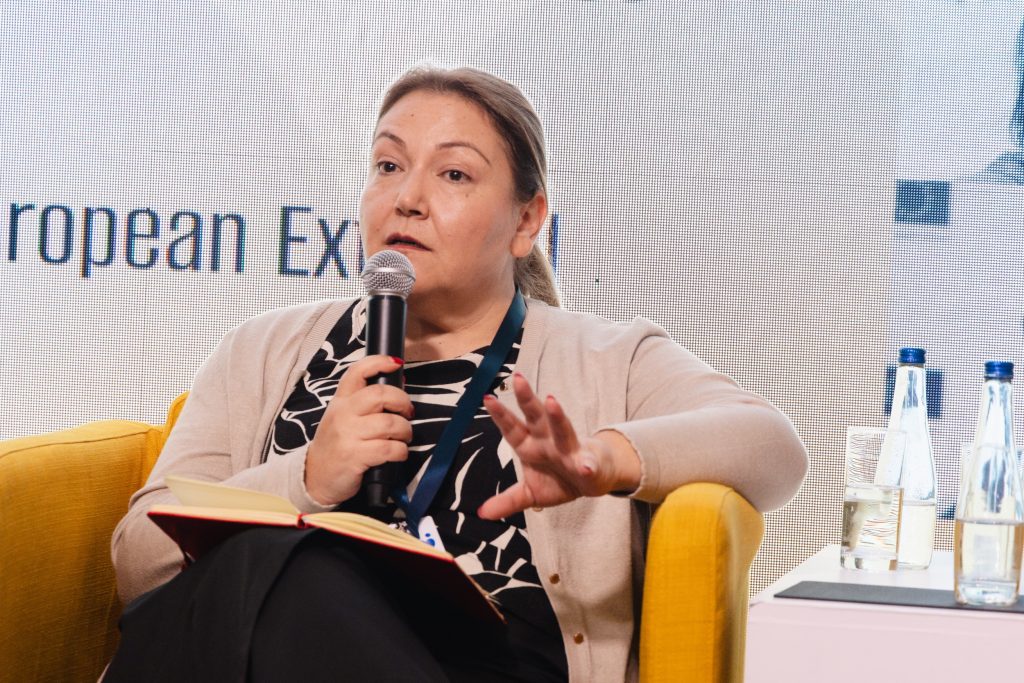
Voko also pointed to a deep gap between ambitious policy plans and actual implementation. Six months after the strategy was adopted, monitoring showed that no measure had been implemented, two thirds of the measures had not even been started, and more than 70 percent of the public institutions involved did not even have a person appointed to implement the strategy.
In addition to institutional stagnation, journalists face direct intimidation. According to a survey by the Association of Journalists of Albania, 70 percent of surveyed journalists have experienced coordinated attacks or disinformation campaigns, while 40 percent admitted they had toned down or abandoned investigative stories for fear of retaliation. Voko stressed that institutions must build trust through preventive and open communication (“pre-bunking”), not by imposing decisions on newsrooms.
Montenegro: Government Passivity and Disinformation Spillovers
Darvin Murić, editor-in-chief of the Raskrinkavanje platform, warned that in Montenegro, which is considered a frontrunner in European Union accession negotiations, the institutional response to disinformation and hybrid threats is marked by passivity.
Murić said institutions most often boil down to sticking the label “hybrid threat” on things without any evidence and without any willingness to cooperate with fact-checkers. As an illustration, he cited a situation in which the domestic press reported that certain EU member states were blocking Montenegro’s integration. While the foreign ministries of the Netherlands, Estonia and Lithuania immediately answered journalists’ queries with evidence, the Montenegrin ministry refused to respond.
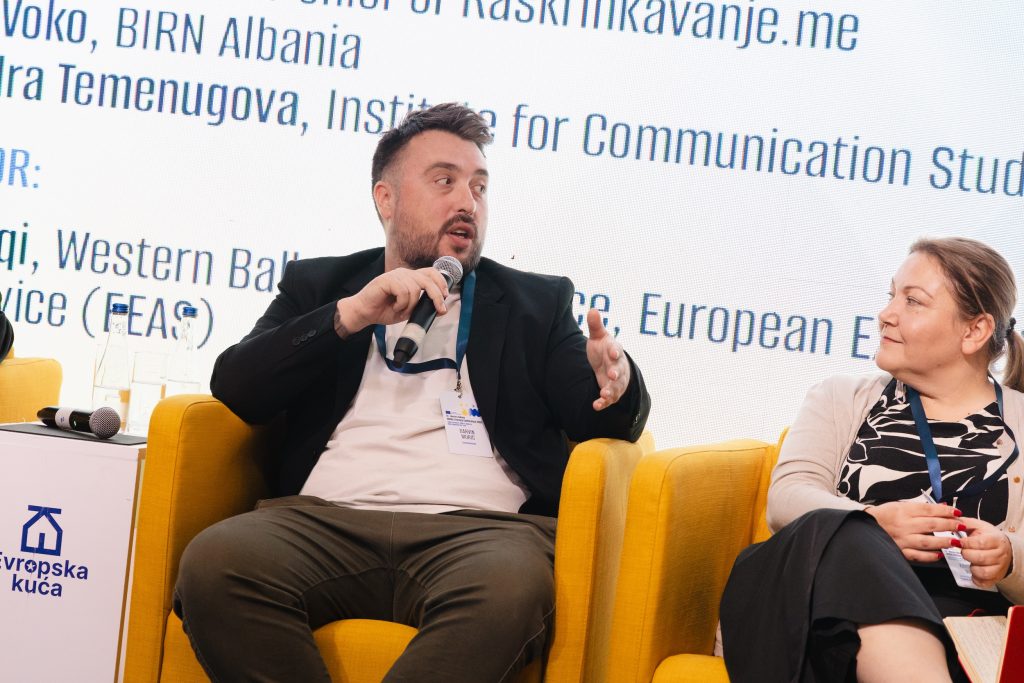
Murić also drew attention to the serious influence of media and tabloids from Serbia that freely spread anti-European narratives and coordinated attacks. He cited the example of fabricated alleged Sky ECC messages of Vesna Medenica, former President of the Supreme Court of Montenegro, where the messages were dated to 2022 even though the service was shut down in 2021, while the Montenegrin prosecution ignored requests to officially deny the false claims. The consequences of disinformation are also visible in health, where Montenegro records one of the lowest vaccination rates against measles, mumps and rubella (MMR) in the world, owing to a lack of timely education.
“Facts must be the only criterion that defines what is manipulation, so that authorities do not use the fight against hybrid threats to settle scores with political opponents,” Murić said.
Panellists concluded that the upcoming application of the EU’s Digital Services Act (DSA) and Artificial Intelligence Act in candidate countries is a key opportunity for small Balkan states. Since small markets individually carry no weight against global technology platforms, aligning legislation with EU standards and connecting the civil sector, regulators and media regionally are the only viable path to protecting the public interest and preserving editorial independence.
Source: Nova ekonomija