
European Mobility Week 2026: Cities Built for Every Generation
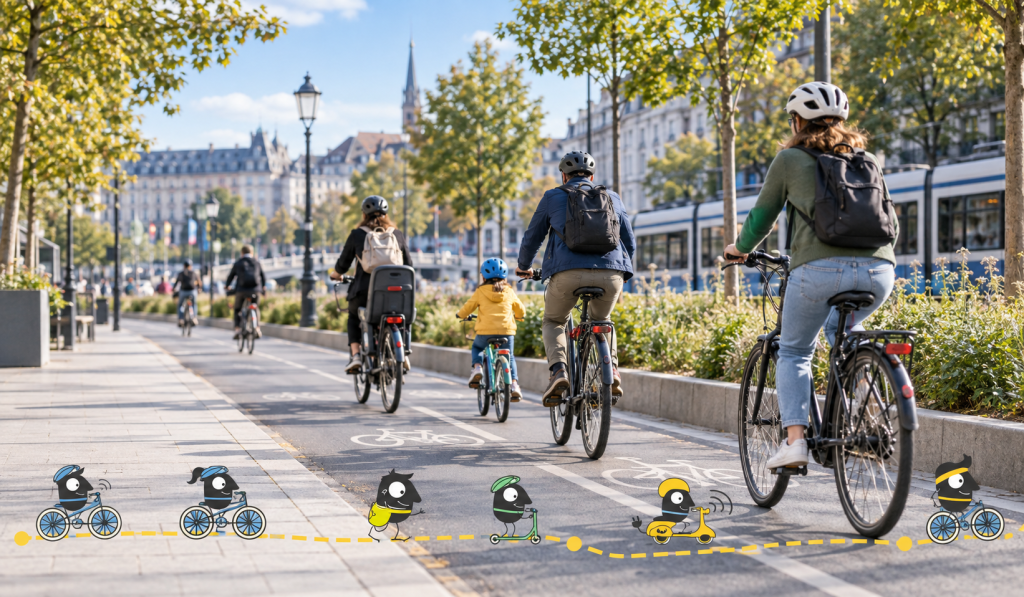
How does a child safely get to school? Can an older person easily reach a doctor? Are public transport, pavements and city squares accessible to people who have difficulty moving around? How much does everyday mobility depend on where you live and how much you earn?
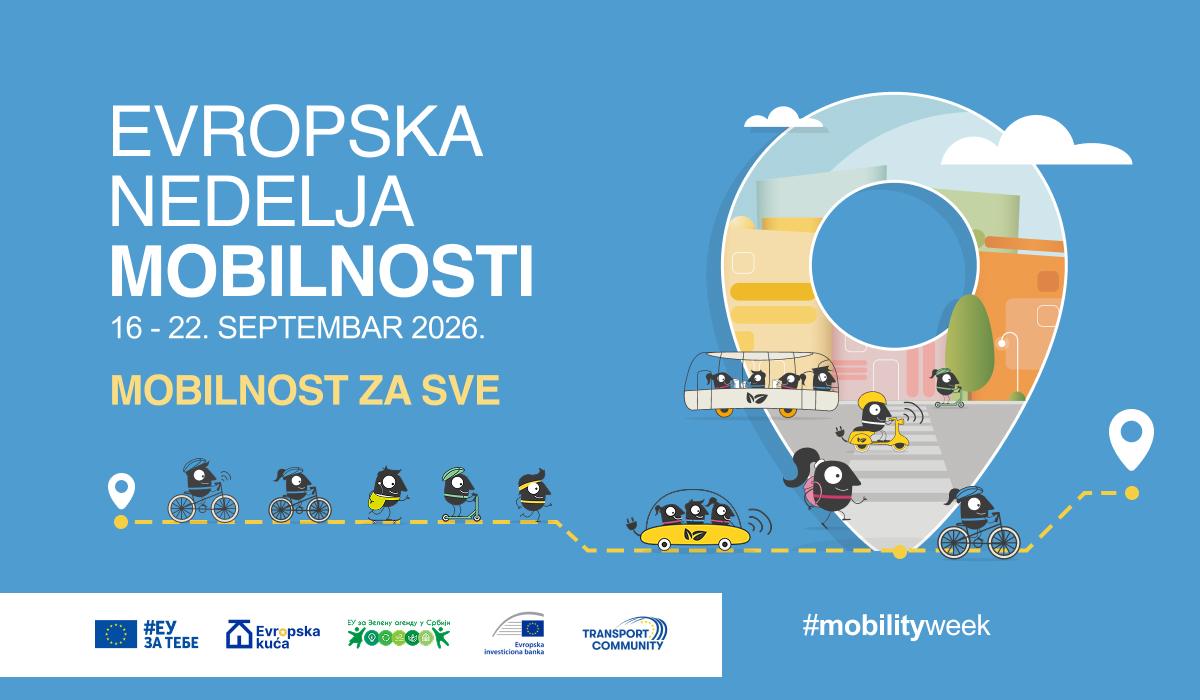
These questions sit at the heart of European Mobility Week, which will be held from September 16 to 22, 2026. This year’s campaign theme remains “Mobility for All”, with a special focus on intergenerational equity: creating transport systems and public spaces that meet the needs of children, young people, adults and older people, both today and in the future.
According to the message of European Mobility Week 2026, sustainable transport should be available to everyone, regardless of income, place of residence, gender or ability. Mobility is therefore seen not simply as a way of getting from one point to another, but as a condition for access to education, work, healthcare, cultural life and participation in the community.
Seven days of campaigning, activities all year round
European Mobility Week is held every year from September 16 to 22. It was launched in 2002 as the European Commission’s flagship campaign for raising awareness of sustainable urban mobility, and has since grown into an international platform connecting cities, local authorities, schools, organizations and citizens.
Although its most visible part lasts seven days, activities are not limited to September. Businesses, civil society organizations, schools, institutions and other organizations can design and register their own sustainable mobility activities, known as MOBILITYACTIONS, throughout the year. These can include initiatives encouraging walking, cycling, the use of public and shared transport, or other solutions that make sustainable travel easier.
In this way, European Mobility Week is not conceived as an isolated event, but as an opportunity to launch, test and showcase changes that can become part of everyday life. Information on getting cities involved and registering activities is available on the campaign’s official website.
What does mobility for all look like?
People’s needs change over the course of their lives. A child, a female student, a parent with a stroller, a daily commuter, a person with a disability and an older resident do not experience the same street, intersection or bus line in the same way.
That is why this year’s theme goes beyond the usual divide between cars, bicycles and public transport. At its centre is the question of whether different ways of getting around are safe, reliable, accessible and well connected to one another.
A city designed for all generations has safe pedestrian routes and crossings, accessible public transport stops and vehicles, clear information, enough places to rest, greenery and shade, as well as public spaces where people can meet and spend time. It is especially important to remove the physical and digital barriers that make it harder for some residents to reach transport and city services.
Mobility for all is therefore, at the same time, a question of traffic, urban planning, safety, health, social inclusion and quality of life.
Cities as places where change is put to the test
During European Mobility Week, cities get the chance to showcase sustainable ways of getting around to their citizens, but also to test how a different organization of traffic and public space would work in practice.
One example comes from Riga, winner of the European Mobility Week award for activities carried out in 2025. Two busy streets in the city centre were temporarily closed to motor traffic, and the space was taken over by tables, benches, planters and people. At the same time, the city collected proposals from residents on which other streets could be used differently.
The temporary change thus became a way for residents to see directly what a space can look like when cars are not given priority. Riga is now continuing to develop its cycling infrastructure, improve pedestrian crossings, create mobility hubs near railway stations, and introduce other permanent measures. This example shows that European Mobility Week can serve cities as a space for testing solutions and discussing long-term change.
Riga also linked the campaign to schools, local organizations, experts and businesses. Activities included walking challenges, bicycle rides, public transport programmes, workshops and discussions on urban planning. This combination of public activities and lasting measures reflects one of the campaign’s key messages: changing habits has a better chance of success when it is backed by safe and accessible infrastructure.
What did Serbia do last year?
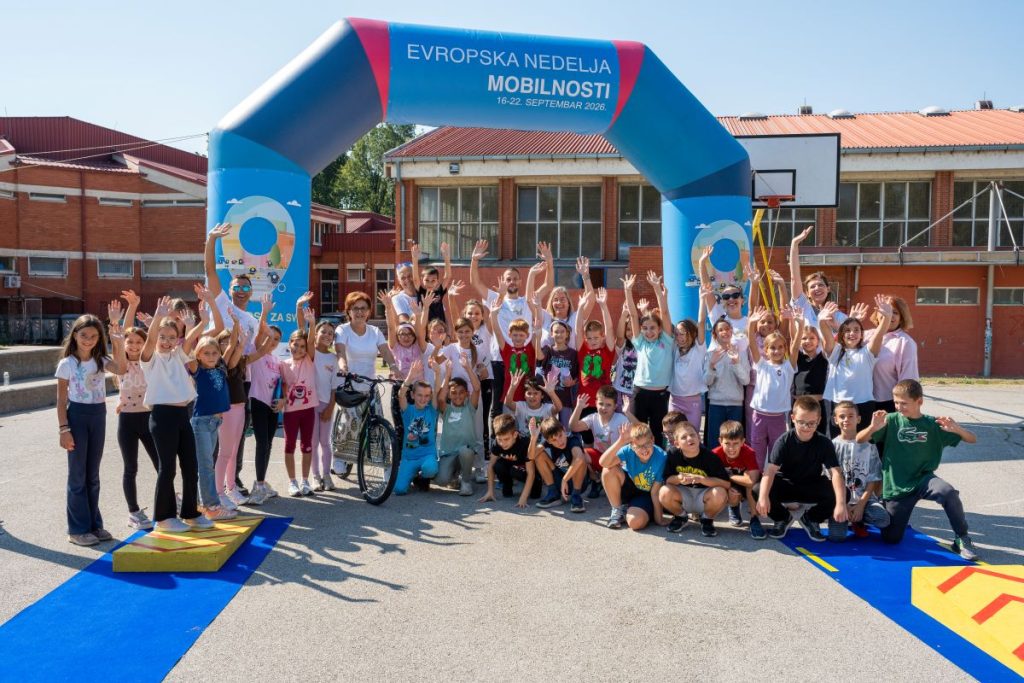
In 2025, Serbia took part in the campaign with 15 registered cities and municipalities, while the Europe Houses in Belgrade and Niš were among the main venues for the programme.
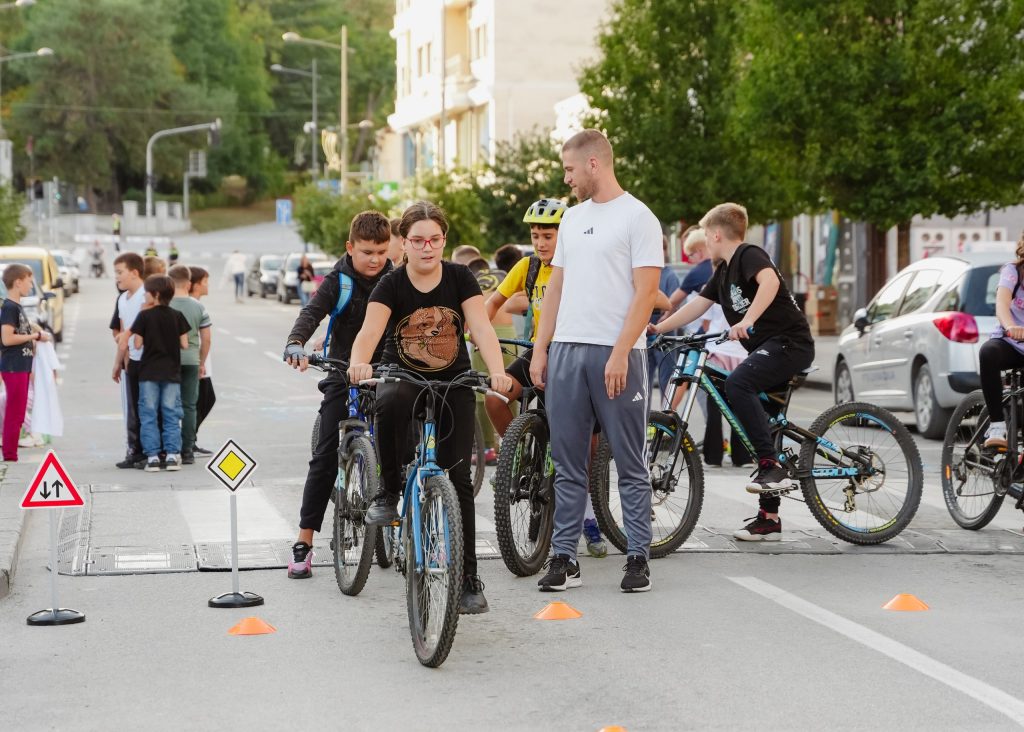
The opening event in Belgrade focused on children and the safety of the youngest road users. The programme included a conversation between students and EU Ambassador Andreas von Beckerath, road safety education, a cycling course, a digital experience of riding through European cities, and the presentation of the “Green Express” electric cargo bike as an alternative to delivery vehicles.
An exhibition of European examples of sustainable mobility was also presented at Europe House. The programme continued in Niš with the FutureECOS event, where participants from Serbia and five European countries exchanged experiences on sustainable mobility, smart urban design and involving citizens in city development.
As part of the “Eco-Municipality” programme, local sustainability initiatives were presented, while the closing of the campaign was dedicated to an interactive school lesson on smart and safe mobility. The activities were carried out in cooperation with the “EU for Green Agenda in Serbia” project, the Transport Community and other partners. A detailed overview can be found in the article “On the Move: European Mobility Week 2025 in Serbia”.
Why does European Mobility Week matter?
The way we get around affects the air we breathe, noise levels, traffic congestion, street safety and the time we spend travelling. At the same time, it determines who has access to school, work, healthcare, culture, sport and public life.
That is why the European dimension of this campaign is not just about promoting cycling or a single car-free day. European Mobility Week links environmental protection with social inclusion, and serves as a reminder that sustainable transport must also be accessible transport.
At this year’s European Mobility Awards, it was emphasized that when cities put their citizens first, transport becomes more than just a way of getting around: it connects communities and improves everyday life. The award-winning examples included temporary pedestrian zones, safer streets, new cycling routes, better public transport, and improved links between urban and rural areas. More on these is available on the official European Mobility Week page.
The campaign’s most important result, then, is not measured only by the number of events held during a single week. Real change is seen in whether a temporarily closed street becomes a safer permanent zone, whether a new cycling path genuinely connects parts of the city, and whether public transport can be used equally by people of different ages, incomes and abilities.
European Mobility Week invites cities to test such solutions, and invites citizens to take part in the conversation about how they want to get around, and what kind of cities they want to leave to the generations that follow.
You can view the full European Mobility Week programme in Serbia for 2026 at the link HERE.