
Learning About Urban Mobility Through Games and Conversation
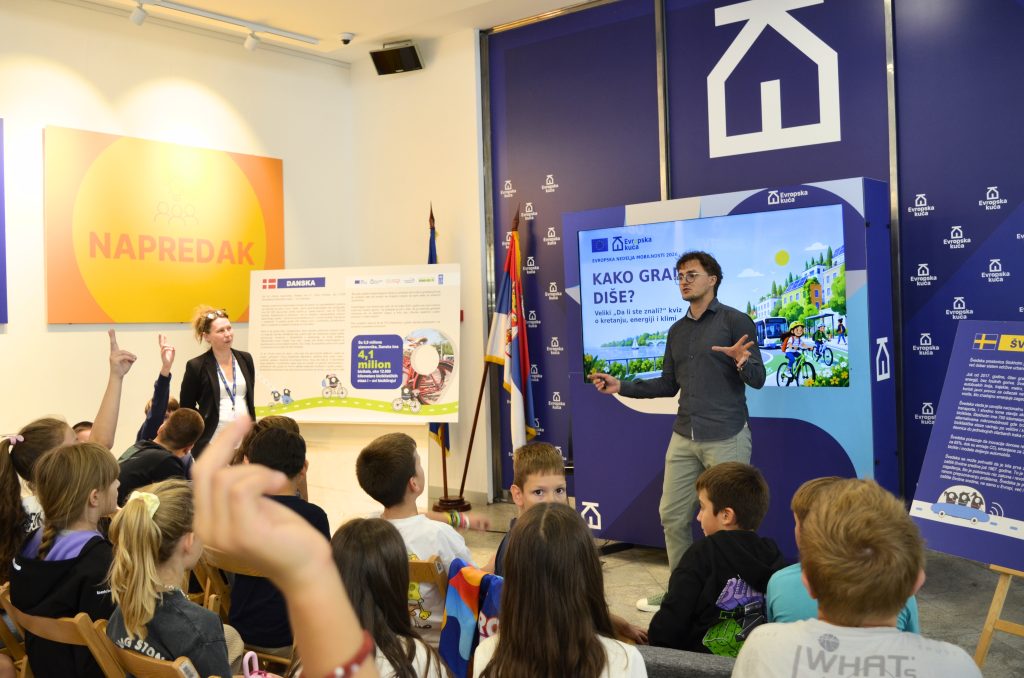
The best way to learn is through practical examples – by understanding rather than memorising. Through conversation, games and practical activities, the pupils explored the best ways of getting around their city and why, when making these choices, they should also take nature and the climate into consideration.
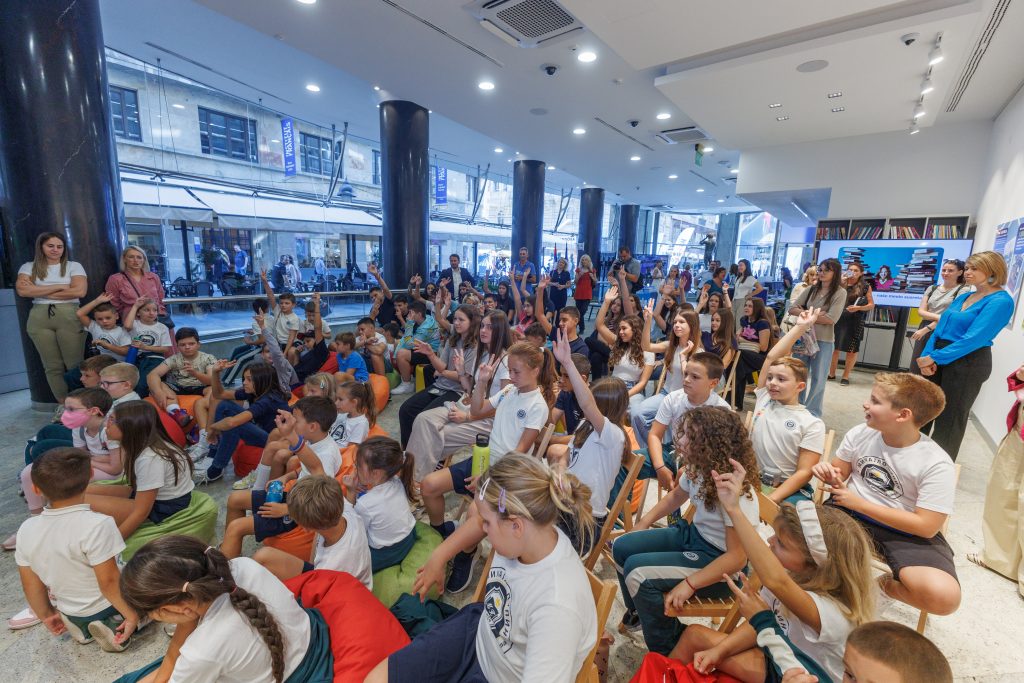
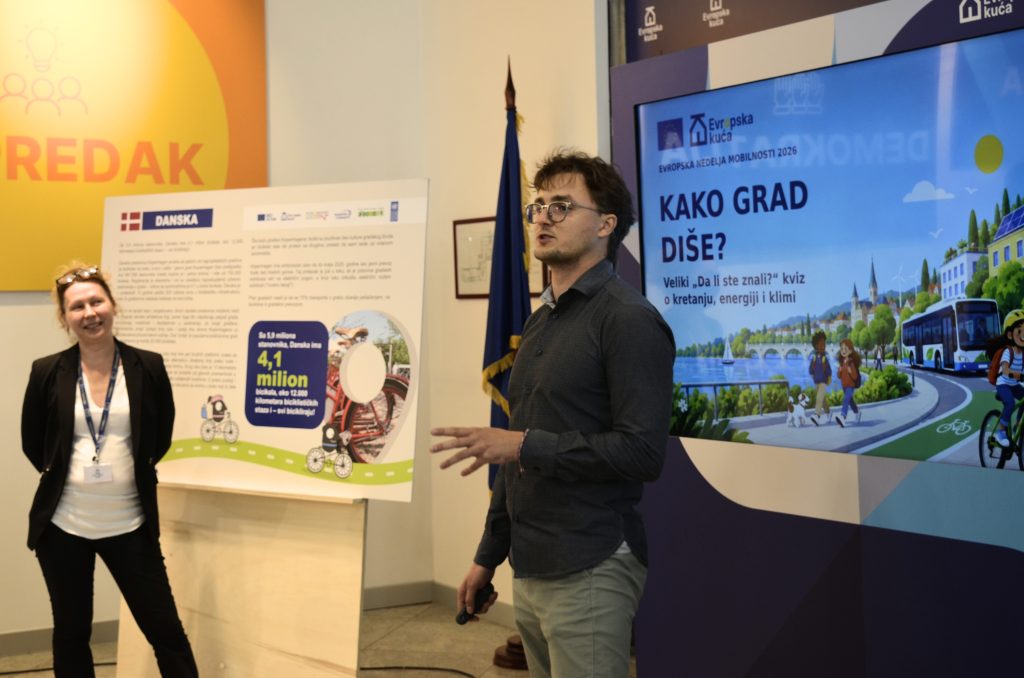
What does a city that “breathes” look like, and how can our everyday decisions about how we move around it make it a better place to live? These were some of the questions discussed by fourth-grade pupils from “Drinka Pavlović” Primary School during the “How Does a City Breathe?” workshop and quiz, held at Europe House Belgrade as part of European Mobility Week.
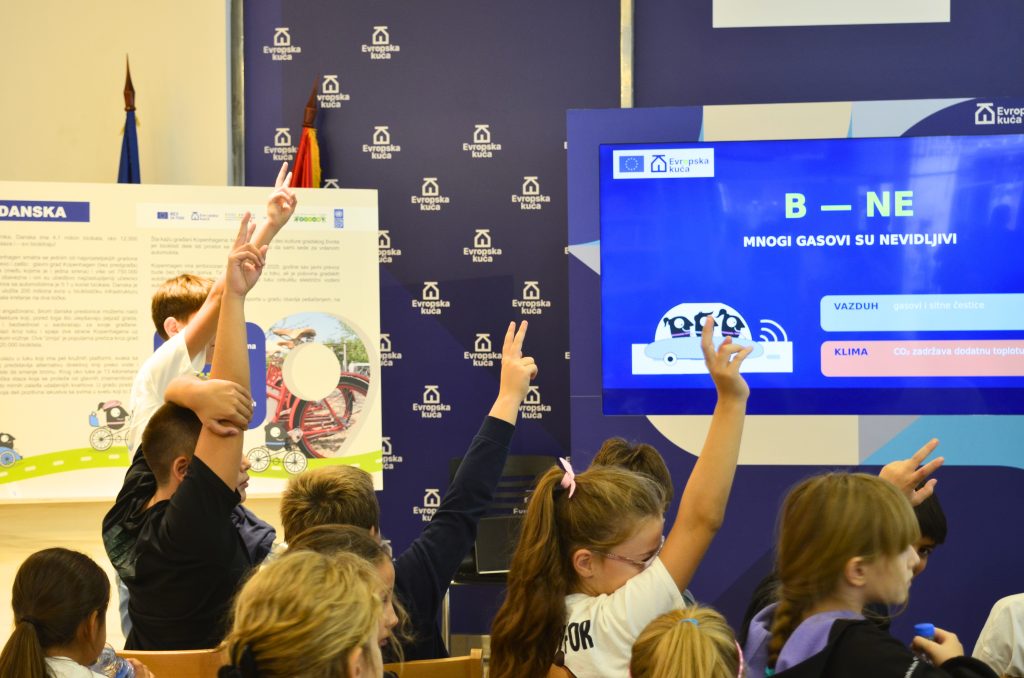
The pupils had no trouble distinguishing between modes of transport that contribute to pollution and those that do not produce exhaust emissions. They also discussed information presented on the exhibition panels, featuring examples of smart urban mobility from cities across Europe.
They were particularly interested to learn that Denmark, with a population of almost six million, has more than four million bicycles and approximately 12,000 kilometres of cycle paths. Another interesting fact was that in Sweden, more than three quarters of the population regularly use public transport to commute to work.
One of the questions that immediately prompted a large number of hands to go up was: what do we gain from having fewer cars on the streets? One pupil immediately called out: “Less noise and less pollution.”
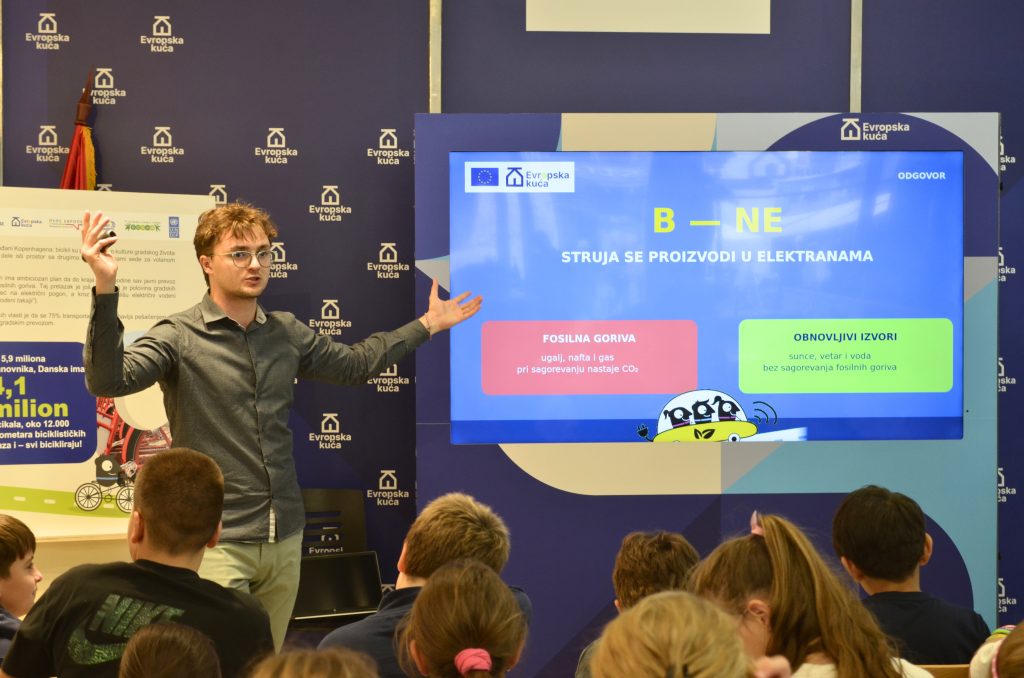
The pupils were not fooled by a tricky question: where is electricity produced – in the socket or somewhere else? They quickly concluded that electricity is generated in a power plant and reaches our sockets through the electricity grid.
Together, they explored another interesting puzzle – what is the greenhouse effect, and what does it have to do with a real greenhouse? The pupils recognised that heat and moisture are retained in such an enclosed space, and then connected this phenomenon with the warming of the planet and the changes it brings to the climate.
Last week, at the very beginning of European Mobility Week, the pupils of “Drinka Pavlović” Primary School also tried out a fun cycling skills course in their schoolyard, as well as a workshop on road safety. They also had the opportunity to talk to an older cyclist, Ivan, about the challenges he faces, as well as to Milan Petrović, a blind Paralympic cyclist.
European Mobility Week has been taking place since 2002, when it was launched at the initiative of the European Commission. Today, it brings together cities across the world, with more than 2,700 cities from 45 countries taking part in the campaign last year.